Veneers for Closing Gaps

Smiles by Dr. P
Page Break


​​​​​​​Porcelain Veneers to Close Gaps Between Teeth

Page Break


A complete patient guide — every question answered in plain language
Serving Beverly Hills · Greater Los Angeles · Antelope Valley, CA · Central Valley, CA
​​​​​​​

Page Break
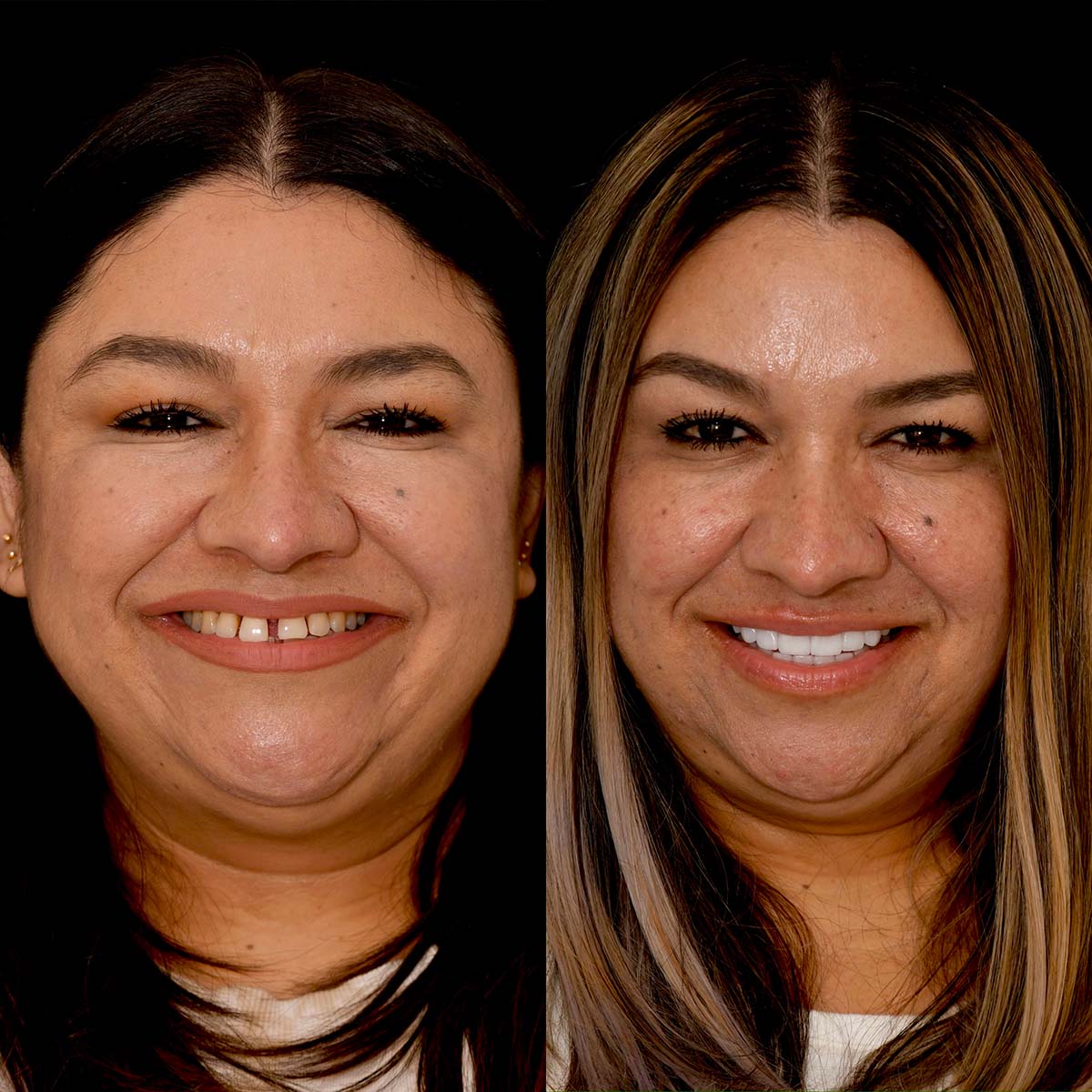
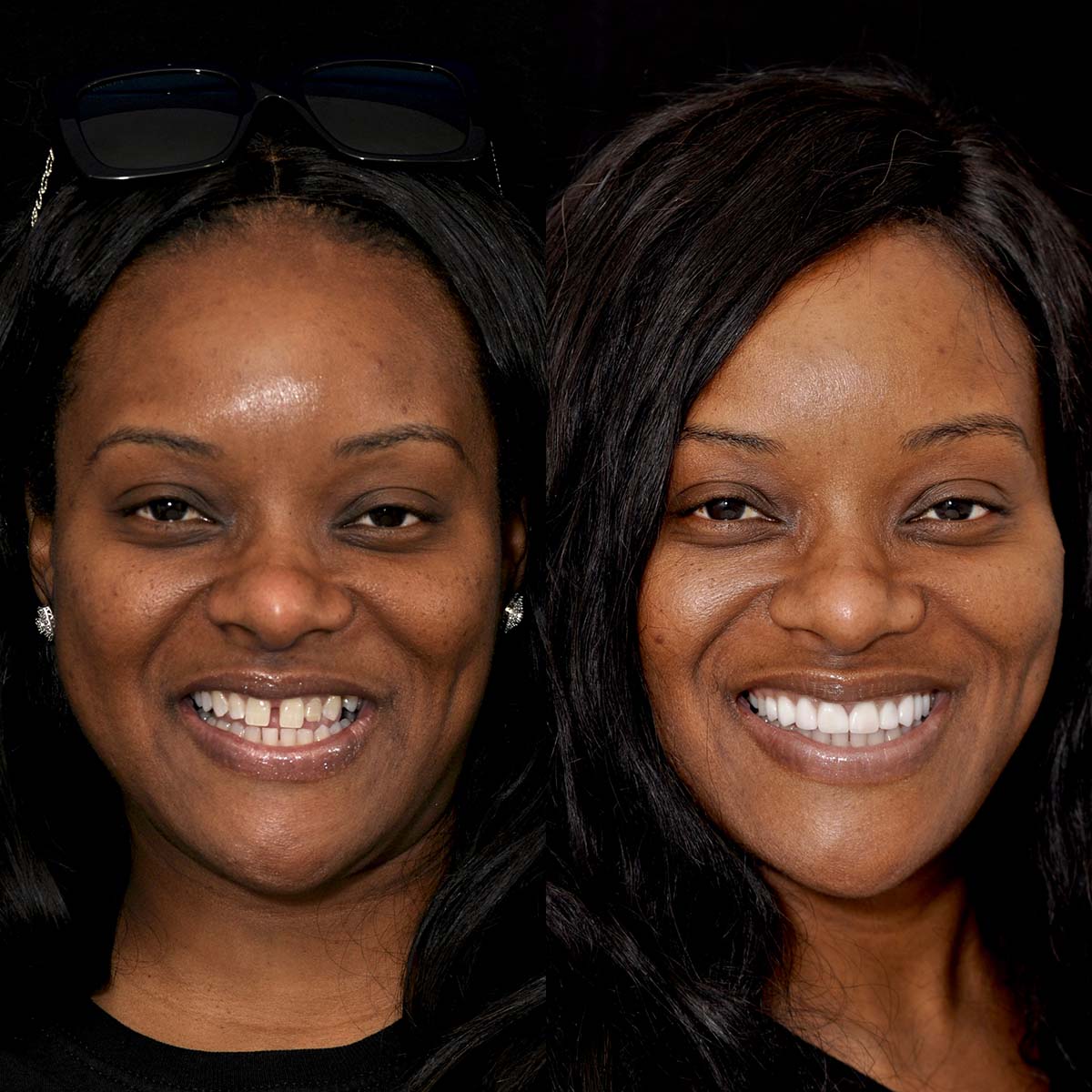
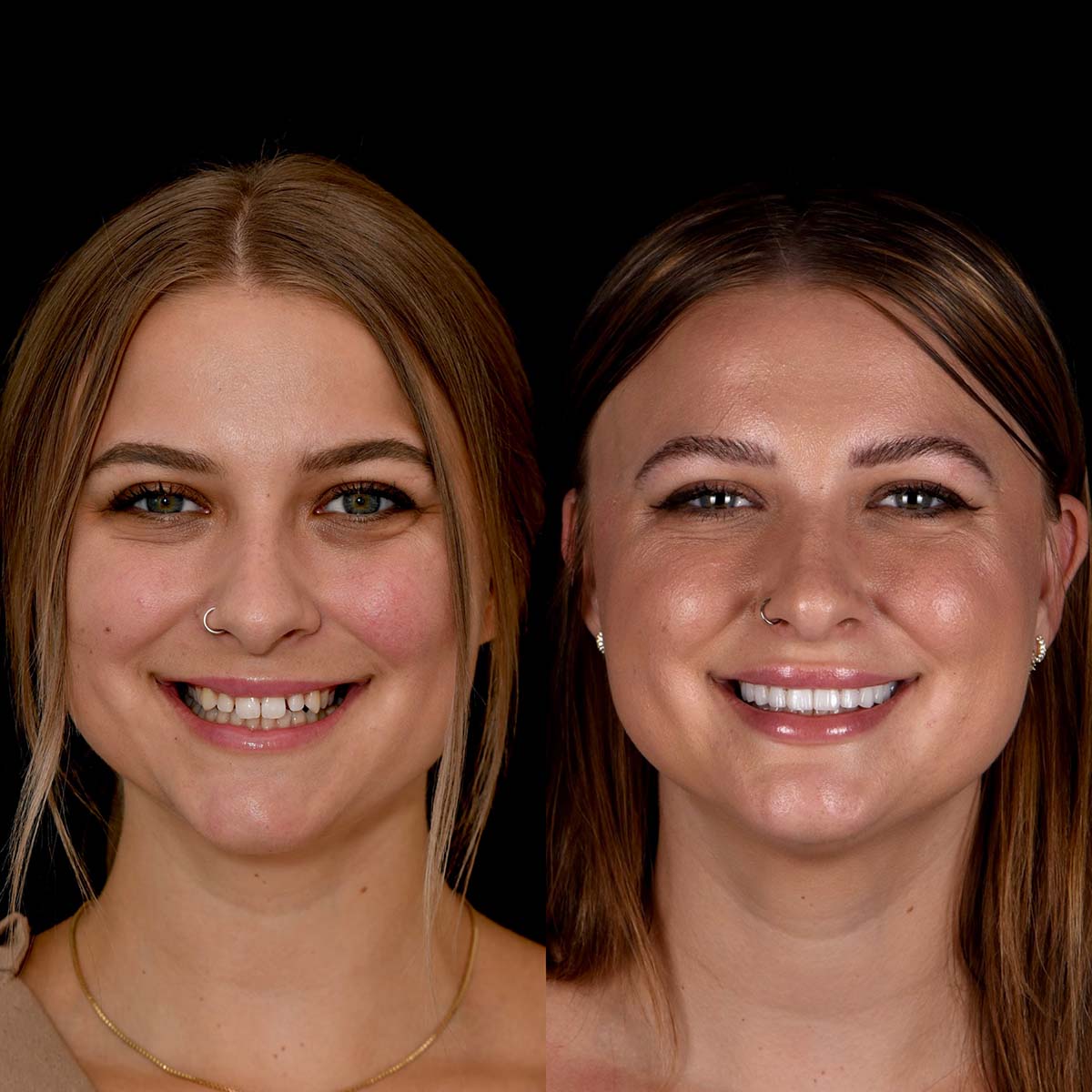
Before and after
​​​​​​​
Page Break
  • Diastema Closure with Veneers
  • No Braces Required
  • Instant Smile Makeover
  • Best Cosmetic Dentist in Los Angeles
Page Break

Dr. Chirag Patel

Page Break

Cosmetic Dentist · Beverly Hills, California
Over 25,000+ veneers placed · 14+ years in cosmetic dentistry · Known for natural-looking results · Minimally Invasive Techniques · Conservative Treatment Approach

Page Break
10—20 yr
Average veneer lifespan
2-5 visits
Typical treatment timeline
0.5 mm
Enamel removed per tooth
25,000+
Veneers placed by Dr. Patel
~1 week
Adjustment period
Understanding Gaps Between Teeth
Page Break

What is a gap between teeth — and is it a dental problem?

Page Break

A gap between teeth is medically called a diastema (plural: diastemas or diastemata). It refers to any visible space between two adjacent teeth — though the term most commonly describes the gap between the two upper front teeth (central incisors).

Gaps can appear anywhere in the mouth — between front teeth, side teeth, or in the back — and range from barely noticeable to quite wide.

Is it a dental problem? Not always. Many people have small gaps with no health consequences whatsoever. However, gaps can sometimes signal an underlying issue — such as gum disease or a missing tooth — and larger gaps may affect how you bite, chew, or speak. Cosmetically, many patients simply want to close the gap for confidence and appearance reasons, and that is a completely valid reason to seek treatment.

Page Break

A diastema is extremely common — studies estimate that gaps between the upper front teeth affect up to 25% of adults worldwide. You are far from alone.

Page Break

What causes gaps between teeth? Why do I have a gap?

Page Break

Gaps between teeth have several possible causes. Understanding your specific cause matters — it affects which treatment will work best and whether the gap could return after treatment.

Page Break
01 — Genetics & Jaw SizeA mismatch between tooth size and jaw size leaves extra space. Naturally small teeth relative to the jaw create visible gaps.
02 — Oversized FrenumThe labial frenum connects the upper lip to the gum. If unusually large, it pushes between the two front teeth and holds them apart.
03 — Gum DiseaseAdvanced periodontitis causes bone loss around teeth, making them loosen and drift — creating or widening gaps.
04 — Missing TeethWhen a tooth is lost or never developed, neighboring teeth shift into the empty space, creating visible gaps throughout the mouth.
05 — Tongue ThrustA habit of pushing the tongue against the front teeth during swallowing. Years of constant forward pressure gradually forces the teeth apart.
06 — Thumb SuckingProlonged thumb sucking in childhood pulls the front teeth forward, often creating an open bite and gaps between upper front teeth.
07 — Undersized TeethNaturally small lateral incisors create noticeable spaces on either side of the upper front teeth.
08 — Bite ProblemsAn overjet or deep bite places uneven forces on teeth, causing them to migrate and create gaps over time.

Why does the cause matter for your treatment? If your gap is caused by an oversized frenum, a minor frenectomy may be recommended alongside veneers to prevent the gap from reopening. If gum disease is the cause, that must be treated first before any cosmetic work begins. Dr. Patel always identifies the root cause before recommending a treatment plan.

Page Break

What are the different types of gaps between teeth?

Page Break
  • Central diastema: The classic gap between the two upper front teeth. The most common type and often the easiest to treat with porcelain veneers.

  • Lateral spaces: Gaps beside the upper front teeth, often caused by naturally small or missing lateral incisors. Veneers are highly effective here.

  • Generalized spacing: Multiple small gaps spread throughout the mouth. Usually can be corrected with multiple porcelain veneers. Some cases require orthodontics to consolidate spacing before cosmetic work.

  • Posterior gaps: Spaces in the back teeth, typically caused by missing molars. These usually require implants, bridges, or partial dentures — not veneers.

  • Black triangles: Small triangular gaps at the gum line between teeth, common after gum recession or orthodontic treatment. Can be addressed with bonding or specially shaped veneers with pink porcelain around the gum line to mimic lost gumline.

Page Break

Dr. Patel uses digital imaging to identify your exact gap type and map the ideal treatment approach during your consultation.

Page Break

General Questions About Veneers

Page Break
What are porcelain dental veneers and how do they work?
Page Break

Porcelain veneers are ultra-thin, custom-crafted shells — typically 0.5 to 0.7 mm thick — bonded permanently to the front surface of your teeth. Made from dental-grade ceramic, they mimic the translucency and light-reflecting properties of natural enamel better than almost any other material available today.


How they work: Your dentist removes a small amount of enamel, takes a digital or physical impression, and sends it to a dental ceramist. The dental ceramist fabricates veneers matched precisely to the shape, size, and shade you have chosen. On your following visit, the veneers are bonded with a strong resin cement and hardened with a curing light.

Porcelain veneers are a permanent, irreversible treatment — the enamel removal means you will always need some form of veneer or crown on those teeth going forward. This is why choosing an experienced, conservative cosmetic dentist like Dr. Patel matters.

Page Break
Can porcelain veneers really close the gap between my front teeth?
Page Break

Yes — closing gaps (called a diastema) is one of the most common and effective uses of porcelain veneers. By careful designing and slight redistribution of shape and length of new veneers on the teeth with gaps and adjacent teeth, Dr. Patel can optically and structurally close the space making your smile look natural. His special design techniques give you a harmonious smile without it looking big and bulky.

This approach works especially well for gaps between the two upper front teeth (central incisors). Results are immediate — you leave the appointment with a closed gap.

Veneers are especially popular for patients who want more than just a closed gap — they want an overall smile transformation in the same procedure. Veneers simultaneously address color, shape, length, and spacing.

Page Break
How big of a gap can porcelain veneers close?
Page Break

Veneers are best suited for gaps up to about 2–3 mm. Larger gaps can technically be closed with multiple veneers like 8-10 teeth, so the results don’t look disproportionately wide — which can be a telltale sign of cosmetic work when not designed properly. For gaps wider than 3 mm, Dr. Patel often recommends:

  • Orthodontic treatment (braces or clear aligners) first to reduce the gap, then veneers for final cosmetic refinement

  • A combination of veneers on multiple teeth to distribute the visual width change more naturally

Dr. Patel uses digital smile designing techniques to give you the proportional outcome before any enamel is touched.

Page Break
Veneers vs. Other Options
Page Break

Should I get veneers or braces/Invisalign to close my gap?

Both can close gaps, but they work very differently. The right choice depends on your priorities, the size of the gap, and whether any underlying bite issues need addressing.

  • Veneers: Instant results in 2-5 visits, also improve color and shape simultaneously — but require permanent enamel removal and cost more per tooth.

  • Braces / Invisalign: Moves teeth to their natural position with no enamel removed. Better for larger gaps or bite issues — but takes 6–18+ months and does not improve color or shape.

  • Dental bonding: Fastest and most affordable for tiny gaps, but less durable and less natural-looking than porcelain over time.

Page Break

Dr. Patel's approach: If your only concern is aesthetics and the gap is small, veneers are often the fastest, most dramatic option. If there is extreme crowding, bite issues, or a larger gap, orthodontic treatment is typically the healthier long-term starting point — sometimes followed by veneers as a finishing touch.

Page Break
Treatment Timeline Improves Color/Shape? Best For
Porcelain Veneers — Dr. Patel's Specialty 2—5 weeks Yes — color, shape, length, symmetry Cosmetic gaps + smile transformation
Dental Bonding 1 appointment Partially Minor gaps under 1mm, budget option
Invisalign / Clear Aligners 6—18 months No Gaps from spacing or mild bite issues
Traditional Braces 12—24 months No Complex bite corrections
Dental Crown 2—3 weeks Yes Structurally damaged teeth with a gap
The Procedure
Page Break

What does the porcelain veneer process look like, step by step?

Page Break
Visit 1 to Los Angeles
Consultation & Preparation
  • Smile assessment, digital imaging and X-rays
  • Discussion of desired shape, size, and shade
  • Minimum enamel preparation and prototype for your review
  • Minimal enamel preparation (0.3—0.7 mm removed per tooth)
  • Impressions sent to Dr. Patel's premium dental lab partner
  • Temporary veneers placed while your permanent ones are crafted (1—3 weeks)
Minimum enamel preparation and prototype for your review
  • Minimal enamel preparation (0.3—0.7 mm removed per tooth)
  • Impressions sent to Dr. Patel's premium dental lab partner
  • Temporary veneers placed while your permanent ones are crafted (1—3 weeks)
Aesthetic prototype review and aesthetic final discussion
  • Finalize aesthetic details like color, shape, texture and translucency
Visit 2 to Los Angeles
Bonding
  • Temporaries removed; fit and shade verified with try-in paste
  • Teeth etched and primed for bonding
  • Permanent veneers cemented and light-cured
  • Minor bite and edge adjustments made; you leave with your final smile
Follow up
  • Re-assessment of bite
  • Aftercare instructions
  • Night guard or retainers delivered for night time wear to ensure longevity

In-house lab and production available to give you the best customized results.. Ask Dr. Patel's team if this is available for your case.

Is getting veneers painful? What is recovery like?

Page Break

The procedure is done under local anesthesia — most patients feel little to no discomfort during preparation. After the anesthesia wears off, some sensitivity to hot and cold is common for a few days up to two weeks.
What to expect after bonding:

  • Mild tooth sensitivity for 1–14 days

  • Slight gum tenderness around the bonded edges

  • A brief adjustment period to how your bite feels — usually resolves within a week

  • Avoid very hard or sticky foods for the first 48 hours

There is no meaningful downtime. Most patients return to normal activities the same day.

Page Break
Longevity & Cost
Page Break

How long do porcelain veneers last when used to close gaps?

Page Break

With proper care, porcelain veneers typically last 10 to 20 years. Studies show that over 90% of veneers are still intact at the 10-year mark. The porcelain itself does not stain, chip easily, or decay — but the bonding margin and underlying tooth still need consistent maintenance.
To maximize longevity:

  • Wear a night guard if you grind your teeth — bruxism significantly shortens veneer life

  • Avoid biting nails, ice, or hard objects directly with veneered teeth

  • Maintain regular professional cleanings every 6 months

  • Use a non-abrasive toothpaste

Dr. Patel uses premium-grade porcelain labs and advanced adhesive bonding protocols — factors that meaningfully extend veneer lifespan compared to lower-cost alternatives.

Page Break

How much do porcelain veneers cost to close a gap in Beverly Hills and Greater Los Angeles area?

In the greater Los Angeles and Beverly Hills area, porcelain veneers typically range from $1,500 to $3000 per tooth. To close a single front-tooth gap, you generally need veneers on 2 teeth — making the total cost roughly $3,000–$6,000 for a straightforward diastema closure. A full smile makeover with 8-10 veneers may range from $15,000 to $25,000.

  • Dentist's experience and specialty training in cosmetic dentistry

  • Lab quality — in-house CAD/CAM vs. a premium hand-crafted dental lab

  • Number of veneers needed for optimal proportional results

Dental insurance rarely covers veneers since they are considered cosmetic. Dr. Patel's practice offers flexible financing through trusted partners including CareCredit, Alphaeon, Lending Club and Cherry— with 0% promotional periods available. Pricing is always discussed transparently during your consultation.

Page Break
CANDIDACY & RISKS

Am I a good candidate for porcelain veneers to close my gap?

Page Break
You are likely a good candidate if:
  • Your gap is 3 mm or less
  • Your overall oral health is good — no active gum disease or untreated cavities
  • You want faster results than orthodontic treatment
  • You also want to improve tooth color, shape, or size at the same time
  • Your bite and jaw alignment are healthy
  • You are an adult (teeth are fully developed)
You may not be a good candidate if:
  • Your gap is caused by an underlying severe bite problem that requires orthodontic correction first
  • You have significantly decayed or structurally compromised teeth — crowns may be more appropriate
  • Active gum disease is present — this must be treated before any cosmetic work
The only way to know for certain is a personalized evaluation. Dr. Patel conducts a thorough clinical assessment and always recommends the most conservative option that achieves your goals.

What are the risks or downsides of using veneers to close a gap?

Page Break
  • Irreversibility: Enamel removal is permanent — you will need veneers or crowns on those teeth going forward.

  • Sensitivity: Some patients experience lasting sensitivity, though this is uncommon when the procedure is done conservatively.

  • Proportionality risk: Poorly designed veneers can look too wide or artificial — the skill and aesthetic eye of your dentist matters enormously.

  • Longevity: Veneers will eventually need replacing, typically every 10–20 years.

  • Gap recurrence: If the underlying cause (tongue thrust, oversized frenum, gum disease) is not addressed, the gap may gradually reopen over years.

Page Break
Why Patients Choose Dr. Patel for Veneers

Trusted by high-discernment patients across Beverly Hills, Greater Los Angeles area.

  • Smile Artistry, Not Just Technique — Dr. Patel treats every smile as a design project, balancing proportion, symmetry, and natural beauty. Results look like a better version of your own teeth, not dental work.

  • Minimally Invasive Philosophy — He recommends the least enamel removal necessary. No-prep and minimal-prep options are always explored first.

  • Premium Porcelain, Master Labs — Every veneer is crafted by a curated network of master ceramists using industry-leading porcelain.

  • Root Cause Always Addressed — Dr. Patel identifies why your gap exists before recommending a solution.

  • Patients Travel From Across Country — Patients come from the East Coast, MidWest, Greater Los Angeles, Antelope Valley, CA and the Central Valley, CA specifically for Dr. Patel's veneer work in Beverly Hills.

Page Break
Mini Case Studies of Closing Gaps with Veneers by Dr. Patel @smilesbydrp

Featured patient stories

Page Break

​​​​​​​Case — Teen to Adult: First-Time Veneer Patient in 20s
Page Break

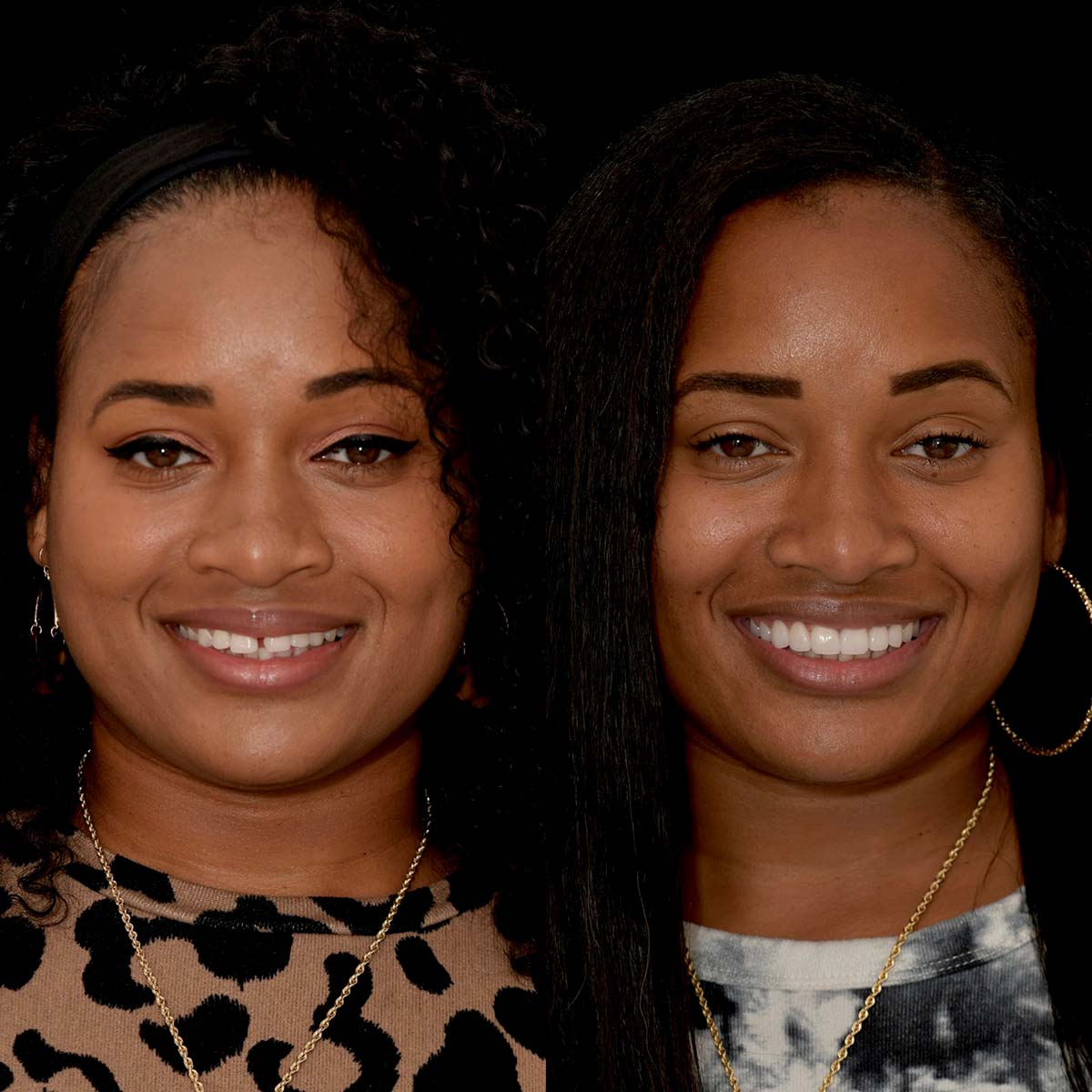
This patient had lived with gaps between her front teeth her entire adult life — told as a teenager that braces were the only option, she never pursued treatment. At 25, she came to Dr. Patel's Beverly Hills practice after seeing his work on Instagram. In four appointments spanning 4-5 weeks, the gaps she had carried for a decade were gone. She chose a slightly brighter shade than her natural teeth and a more symmetrical shape, resulting in the smile makeover she had wanted since high school.

Page Break
Case — Gap From Gum Disease
Page Break

With age and progressive gum disease, gaps that were never there before can appear at the gum line — or existing gaps can widen. This patient in her 40s had noticed her front tooth gap gradually increasing over a decade. Dr. Patel first ensured the gum health was stable and any bone loss was arrested before proceeding with cosmetic work. Once the foundation was healthy, 10 porcelain veneers on the top teeth were placed, closing the gap and restoring the tooth proportions that gum recession had altered. The result gave her a smile that looked 15 years younger without looking artificially overdone.

Page Break
Case — Gap From Missing Lateral Incisor
Page Break

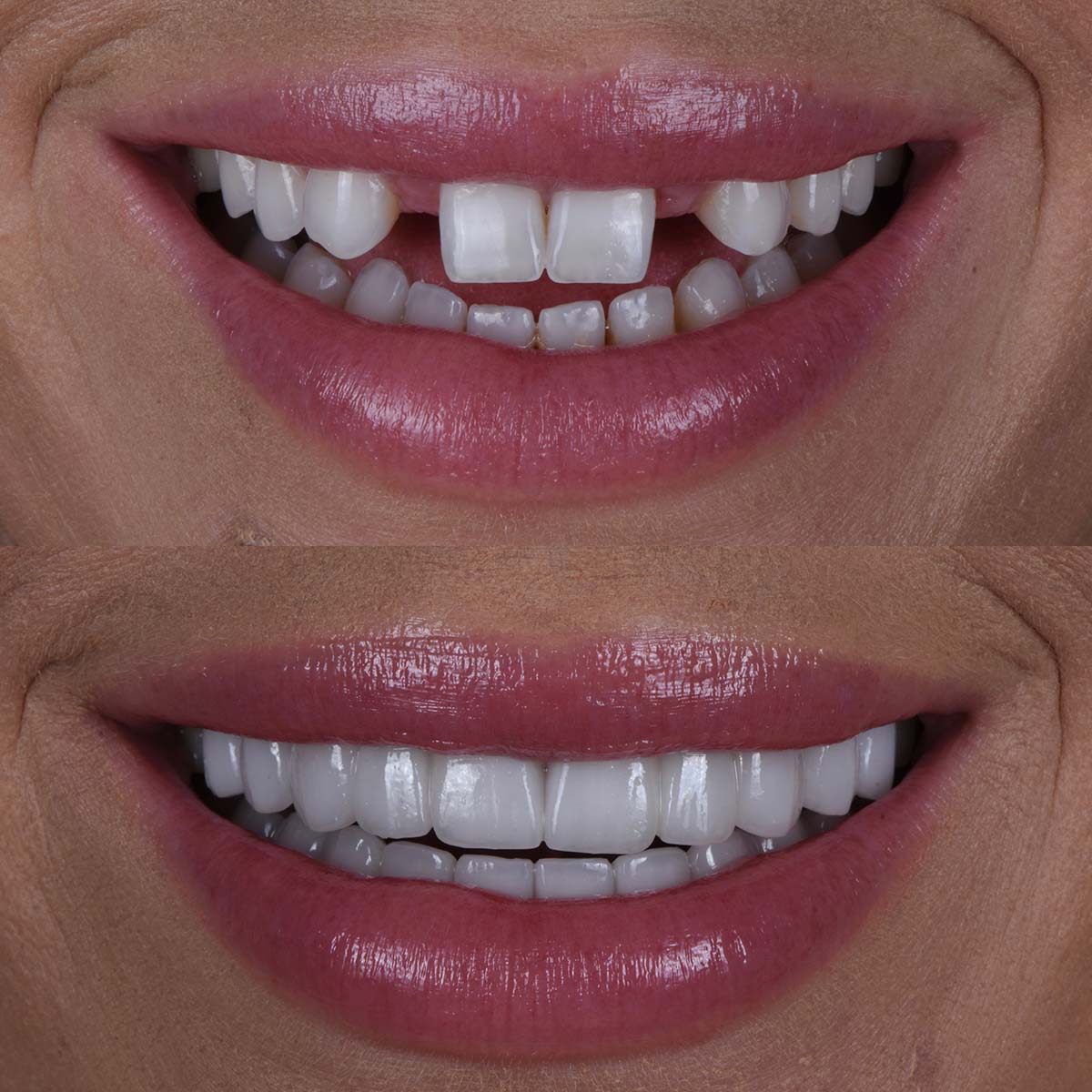
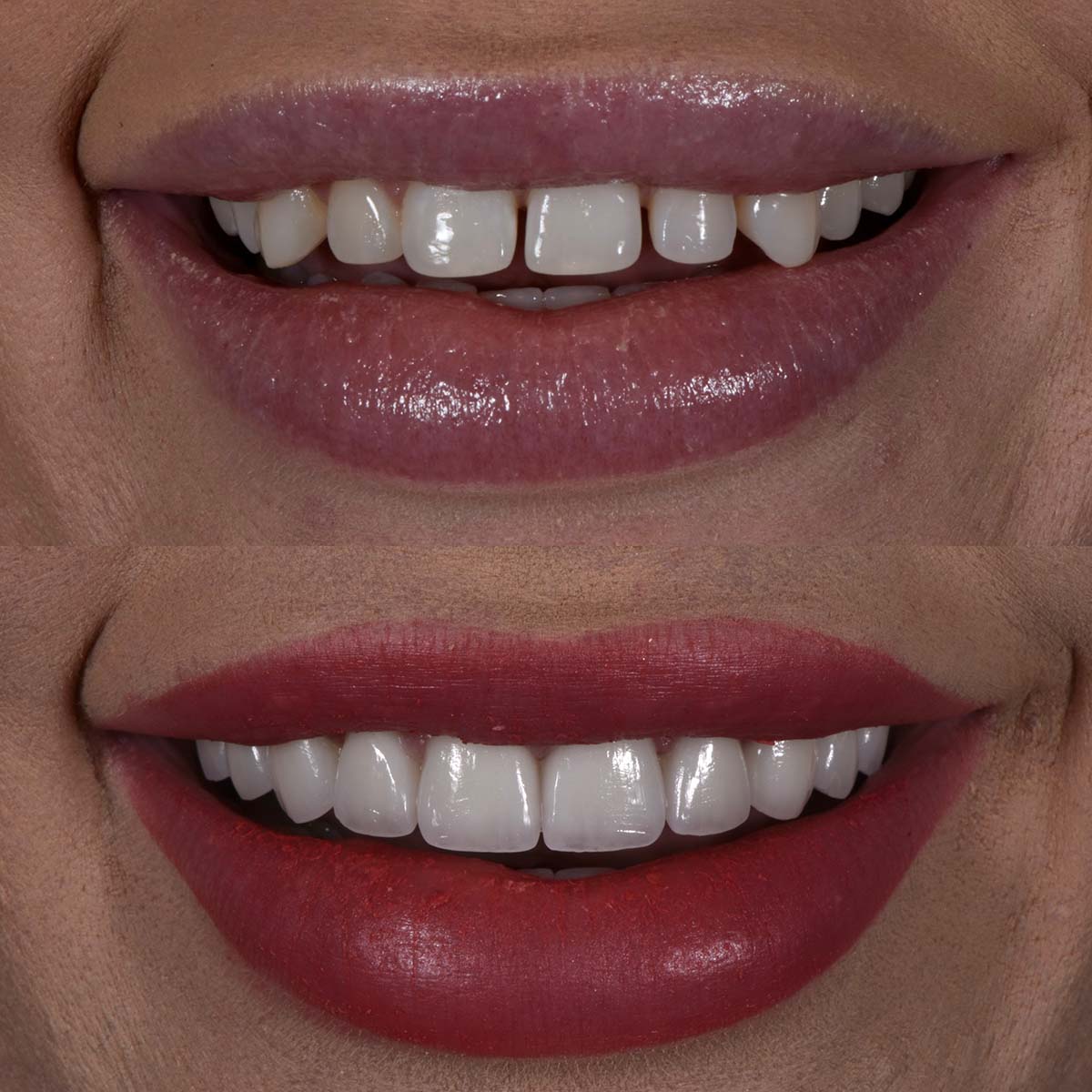
This patient was born without upper lateral incisors — the teeth on either side of the front two. Rather than leaving the spaces empty or pursuing implants, she chose porcelain veneers to cosmetically fill the gaps. Dr. Patel custom designed this smile with a combination of a conservative bridge and veneer approach, creating a natural-looking full smile. This is one of the most common applications of veneers for spacing issues and one of the most visually dramatic transformations in cosmetic dentistry. Instant results achieved for gap closure due to missing teeth with no downtime.

Page Break
Case — No-Prep Porcelain Veneers for Minor Gap
Page Break

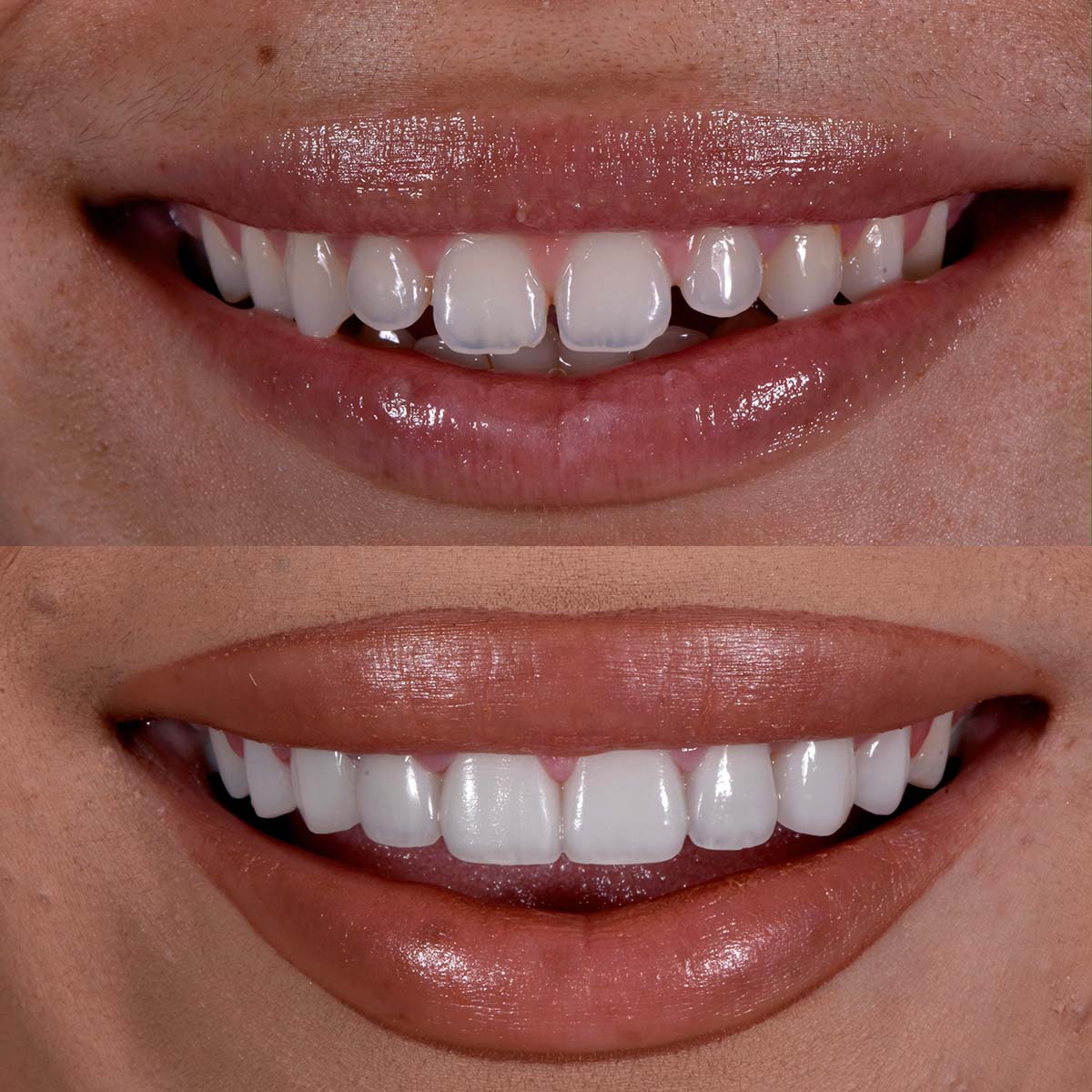
This 24 year old female patient presented to our office being camera shy because of her small teeth and gaps between her teeth. Not every gap requires enamel removal. This patient had small gaps between her front teeth with otherwise healthy, small teeth. Dr. Patel assessed her tooth thickness and concluded she was a candidate for no-prep veneers — ultra-thin porcelain shells placed directly over the existing enamel with no to minimal removal or drilling. The gap was closed in 4 visits with zero sensitivity. No-prep veneers are not appropriate for every case, but when the anatomy allows, they are Dr. Patel's preferred approach.

Page Break
Case — Traveling Patient From Florida, Wide Gap Closure with Veneers in Beverly Hills
Page Break

This patient flew from Florida to Beverly Hills, CA for her veneer consultation after researching cosmetic dentists across the country. This patient had a 3.5mm gap between her front teeth — wider than what two veneers alone can close naturally. Rather than simply widening two teeth and creating a bulky result, Dr. Patel designed a 10-veneer smile that distributed the width change evenly across the entire visible smile. The gap is gone, the teeth look proportional to her face, and the overall smile is dramatically brighter and more symmetrical. This is the design thinking that separates an experienced cosmetic dentist from a general one. The entire process required two trips to Beverly Hills — the first for consultation and preparation, the second for final bonding and post op. Extended appointments are available for patients traveling from across the USA, Central Valley, Antelope Valley, and beyond.

Page Break
Case — Classic Central Diastema, 10 Veneers
Page Break

31 year old female patient presented with a 2mm central diastema — a gap between the two upper front teeth that had been present since childhood. The gap was purely cosmetic with no underlying bite issues. Dr. Patel closed the space using 10 minimal-prep porcelain veneers across the smile zone, redistributing the tooth widths proportionally so the result looks completely natural rather than artificially widened. 5 visits. No orthodontics. No downtime.

Page Break
Case — Male Patient, Advanced Gum Disease and Excessive Gum Display
Page Break

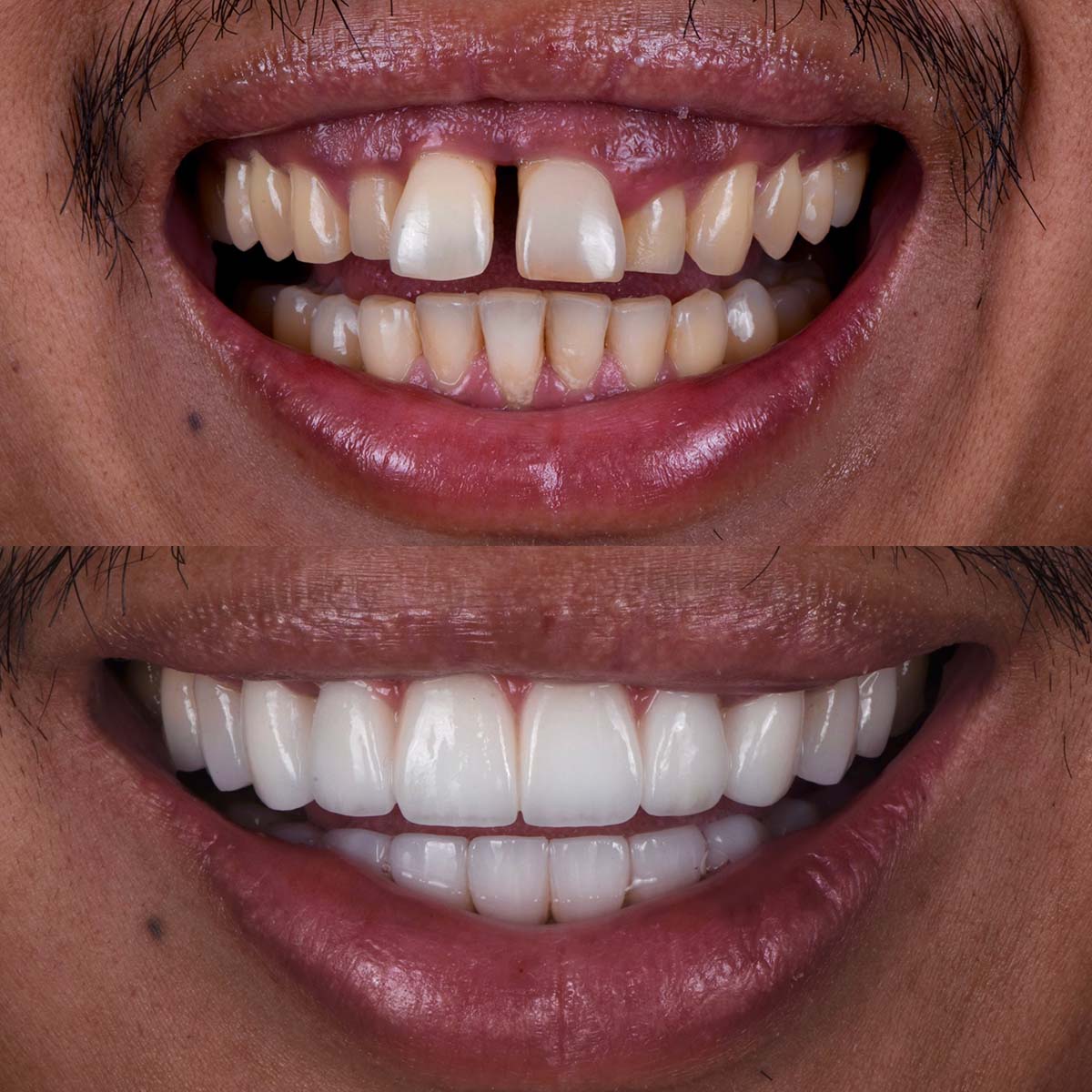
Male 32 year old patient presented with advanced gum disease causing widening of front gap and extreme mobility of front two teeth. Dr. Patel @smilesbydrp meticulously planned this advanced case with a combination of gum disease treatment with advanced modalities like laser assisted devices, bridge and veneer combination to give this patient the smile of his dreams. This patient travelled from the East coast and was able to live his life with full confidence in just a few trips to Beverly Hills, CA.

Page Break
Case — Male Patient, Natural-Looking Gap Closure
Page Break

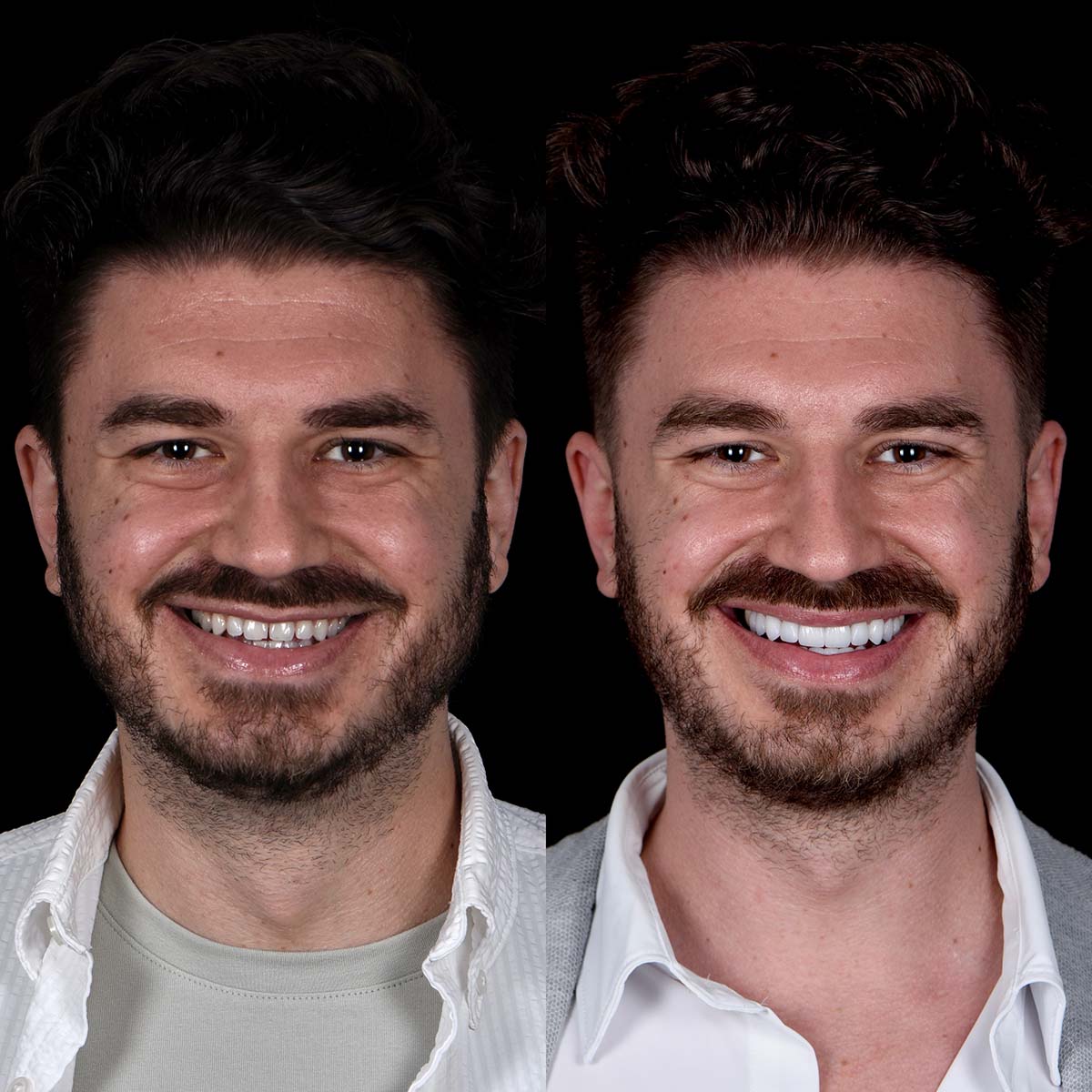
Male patients often hesitate before pursuing veneers, concerned the result will look too white, too uniform, or obviously cosmetic. This patient came to Dr. Patel specifically because of his reputation for natural-looking results. His gap was closed using top 10 veneers and bottom 8 veneers in a shade just slightly brighter than his natural teeth, with subtle characterization in the porcelain to replicate the texture and slight variation of real enamel. Standing across the room, no one would guess these are veneers. Up close, they simply look like excellent teeth. This is Dr. Patel's design philosophy for every case.

Page Break
Case — Female Patient, Natural-Looking Gap Closure with No Prep Veneers-Minimally Invasive Technique
Page Break

Our young female patient in her 20s presented to us with gaps between her teeth. The gap between her front teeth had always made her self-conscious — not just in photos, but in daily conversations where she found herself covering her mouth without thinking. She had been told by a local dentist that she would need braces first, then veneers. She assumed that meant two years of treatment and a significant financial commitment. So she waited. Then she found Dr. Patel.

At her consultation in Beverly Hills, Dr. Patel assessed her tooth thickness, the size of the gap, and the alignment of her bite. His conclusion was different from what she had heard before: she was a candidate for minimal prep veneers — ultra-thin porcelain shells that bond directly to the existing tooth surface with no to minimal drilling, numbing, or enamel removal. No sensitivity.

The result is completely natural-looking — proportional, bright without being blinding, and shaped to complement her face. More than the aesthetic outcome, what our patient talks about is the feeling of walking into a room without thinking about her smile for the first time in her adult life. Extended appointments are available for patients traveling from Fresno, Bakersfield, Visalia, and throughout the Central Valley. The drive, she says, was absolutely worth it.

Page Break
Serving Patients Across California

Serving patients across California

Greater Los Angeles

Serving patients throughout LA County including Beverly Hills, Santa Monica, Pasadena, and surrounding communities.

Orange County

Convenient access for patients from Irvine, Newport Beach, Anaheim, Huntington Beach, and throughout OC.

Central Valley

Extended appointments available for patients traveling from Fresno, Bakersfield, Visalia, and surrounding areas.

Ready to Fix Your Bite in Los Angeles?

Schedule a complimentary smile consultation with Dr. Patel. See your outcome digitally before any treatment begins.
(323) 909-9300

VENEERS BEFORE AND AFTER