© 2026 Smiles By Dr. P. All rights Reserved - Accessibility Statement - Privacy Policy - Sitemap
435 N. Roxbury Drive. Suite#410, BEVERLY HILLS, CA 90210 USA

Porcelain Veneers In Beverly Hills
COSMETIC DENTISTRY · PATIENT GUIDE · DR. CHIRAG PATEL
Porcelain Veneers in Beverly Hills, Los Angeles
Can porcelain veneers transform your smile? Every question patients ask — answered in plain language by Dr. Chirag Patel, a Beverly Hills cosmetic dentist with 14+ years of experience and over 25,000 veneers placed. Learn how hand-crafted, custom porcelain veneers correct chipped, worn, discolored, gapped, and unevenly shaped teeth — and what to expect from a porcelain veneers smile makeover at Smiles by Dr. P on North Roxbury Drive.
Custom Crafted Smiles By Dr. P | Chirag Patel, DMD a Cosmetic Dentist in Beverly Hils, Los Angeles
25,000+
Veneers placed by Dr. Patel
2–3 visits
Typical treatment timeline
0.3–0.7 mm
Enamel removed per tooth
14+ yrs
In cosmetic dentistry
10–20 yr
Average veneer lifespan
UNDERSTANDING PORCELAIN VENEERS
Q. What are porcelain veneers and what do they correct?
Porcelain veneers are thin, hand-crafted shells of dental porcelain bonded to the front surface of natural teeth to correct color, shape, length, and alignment.
Standard porcelain veneers require removing 0.5–0.7 mm of enamel per tooth to make room for the restoration. No-prep veneers are engineered to be thin enough — often just 0.2–0.3 mm — that they can be bonded directly onto the existing tooth surface with little or no drilling at all.
Porcelain veneers can correct chipped, worn, discolored, slightly crooked, or unevenly spaced teeth in two to three visits spanning over four to six weeks. Because high quality porcelain is used to fabricate porcelain veneers at SmileByDrP and cemented with meticulous techniques by Dr. Chirag Patel in Beverly Hills, these veneers typically last 10 to 20 years with proper care. These custom crafted veneers are also highly stain-resistant and biocompatible.
At Smiles by Dr. P | Chirag Patel, DMD, designs every porcelain veneer case as a facial-aesthetic procedure — not a one-size dental product. Tooth shape, gumline, lip dynamics, and skin tone all inform the final design. Each veneer is custom-made by a master ceramist from feldspathic porcelain, lithium disilicate (e.max), or layered ceramics, chosen based on the patient's enamel, bite, and aesthetic goals.
“Over 7 years with my veneers from Dr. Patel and I still get compliments on how natural they look. I was so happy with how they turned out and all this time later I’m still in love with the results. I adore Dr. P and his staff - happy to have a dentist I trust to keep me smiling and healthy!”- GOOGLE REVIEW BY JF
Q. What problems do porcelain veneers fix?
Porcelain veneers correct a wide range of cosmetic concerns like chipping, discolored teeth, worn down teeth, gaps in teeth, misalignment of teeth or genetically mis-shaped teeth by replacing the visible surface of the tooth with custom-engineered ceramic.
Dr. Chirag Patel uses porcelain veneers at his Beverly Hills practice to address the following:
- Chipped or cracked front teeth
- Worn or shortened edges from grinding or aging
- Permanent discoloration — intrinsic stains, tetracycline staining, fluorosis
- Small gaps between teeth (diastemas)
- Mildly rotated, tilted, or unevenly aligned teeth where orthodontics is declined
- Undersized, peg-shaped, or congenitally small teeth
- Asymmetric tooth shape, length, or proportion
- Overall smile design — proportion, symmetry, lip dynamics
Veneers are most effective when used as part of a coordinated smile design rather than placed individually. Dr. Chirag Patel's process in Los Angeles always begins with a full facial-aesthetic evaluation, not a tooth-by-tooth approach for all his smile makeover cases with Porcelain Veneers.
VENEERS VS. ALTERNATIVES
Q. How do porcelain veneers compare to crowns and composite bonding?
Porcelain veneers, crowns, and composite bonding all improve the appearance of teeth — but they cover different amounts of tooth, last different lengths of time, give different aesthetics and are best suited to different problems.
The table below summarizes how Dr. Chirag Patel chooses between porcelain veneers, full-coverage crowns, and direct composite bonding for cosmetic dentistry patients in Beverly Hills and the greater Los Angeles area.
| Treatment | Coverage | Enamel Removed | Lifespan | Best for |
|---|---|---|---|---|
| Porcelain Veneers | Front surface only | 0.3-0.7 mm | 10-20 years | Aesthetic smile redesign across multiple teeth |
| No-Prep Veneers | Front surface only | 0-0.3 mm | 10-20 years | Mildly undersized or worn teeth with favorable anatomy |
| Full-Coverage Crowns | Entire tooth | 1.5-2.0 mm | 10-15 years | Structurally compromised teeth, post-root-canal |
| Composite Bonding | Targeted area only | Minimal to none | 4-8 years | Small chips, minor reshaping on a budget |
| Professional Whitening | None | None | 6-18 months per cycle | Surface stain only — does not change shape |
| Orthodontics + Whitening | None | None | Permanent if retained | Crookedness and color without restorations |
Q. Are porcelain veneers reversible?
Traditional porcelain veneers are not fully reversible because a small amount of enamel — typically 0.3 to 0.7 mm per tooth — is removed during preparation to allow the porcelain to sit flush with surrounding teeth. Also, to bond porcelain veneer to teeth, the enamel has to be chemically altered for proper long term adhesion.
A common myth in cosmetic dentistry is that no prep porcelain veneers are reversible. Dr. Chirag Patel believes in being direct with patients about this. To bond porcelain to a tooth, the enamel must be chemically etched, which permanently alters the outer enamel layer. Once a veneer is placed, the tooth will always require a veneer, crown, or similar restoration on that surface going forward.
No-prep and minimum-prep options preserve significantly more enamel and are an alternative for the right candidate. Dr. Patel reviews both options during the cosmetic dental consultation in Los Angeles, so patients can make a fully informed decision. He recommends porcelain veneers only when he is confident the patient is making a choice they will be happy with for 10 to 20 years.
Curious if porcelain veneers are right for you?
Schedule a consultation at Smiles by Dr. P | Chirag Patel, DMD — a cosmetic dentist in Beverly Hills serving Greater Los Angeles and beyond.
SMILE DESIGN AT SMILES BY DR. P | CHIRAG PATEL, DMD
IN BEVERLY HILLS— MATCHING VENEERS TO YOUR FACE SHAPE
Q. Does my face shape affect what porcelain veneers should look like?
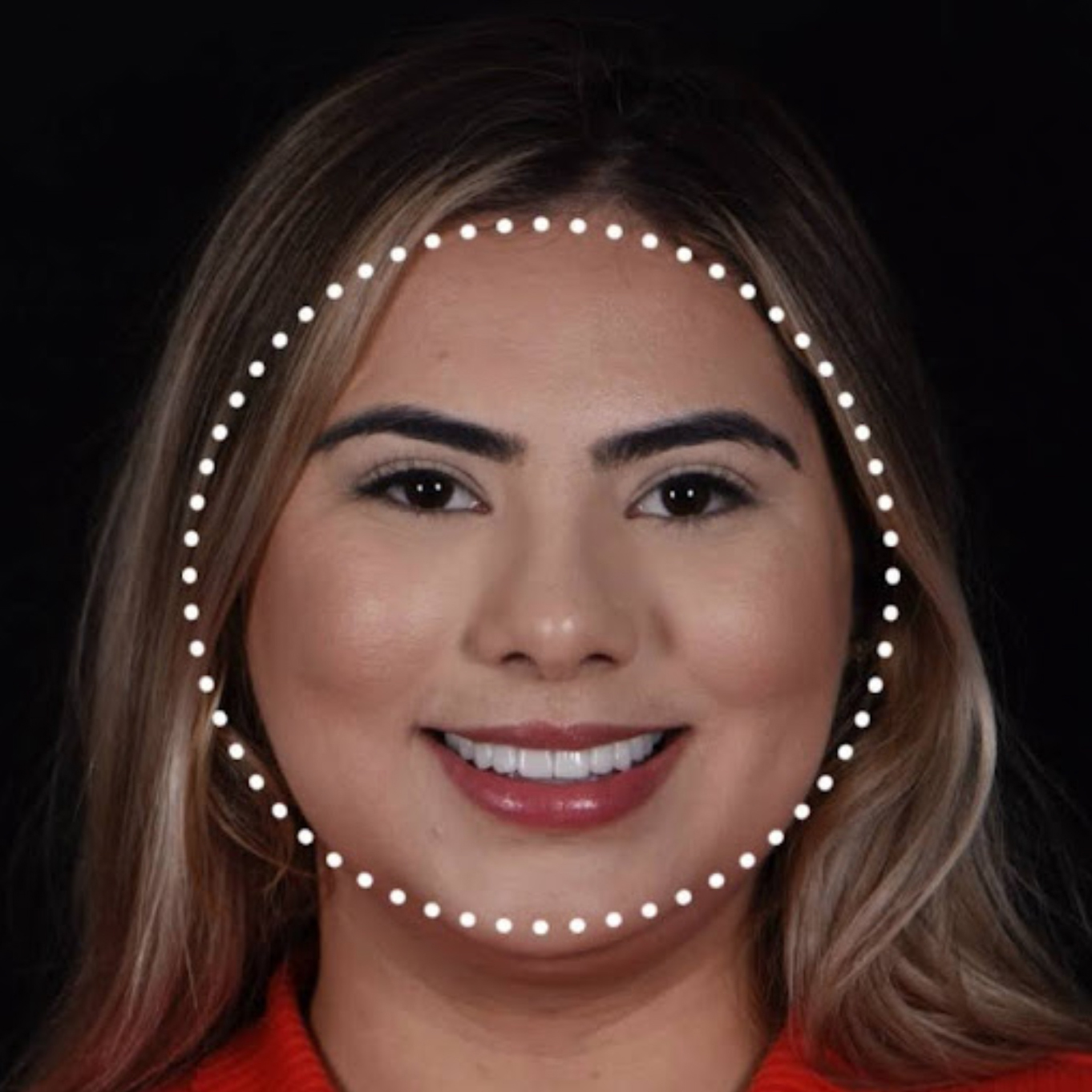
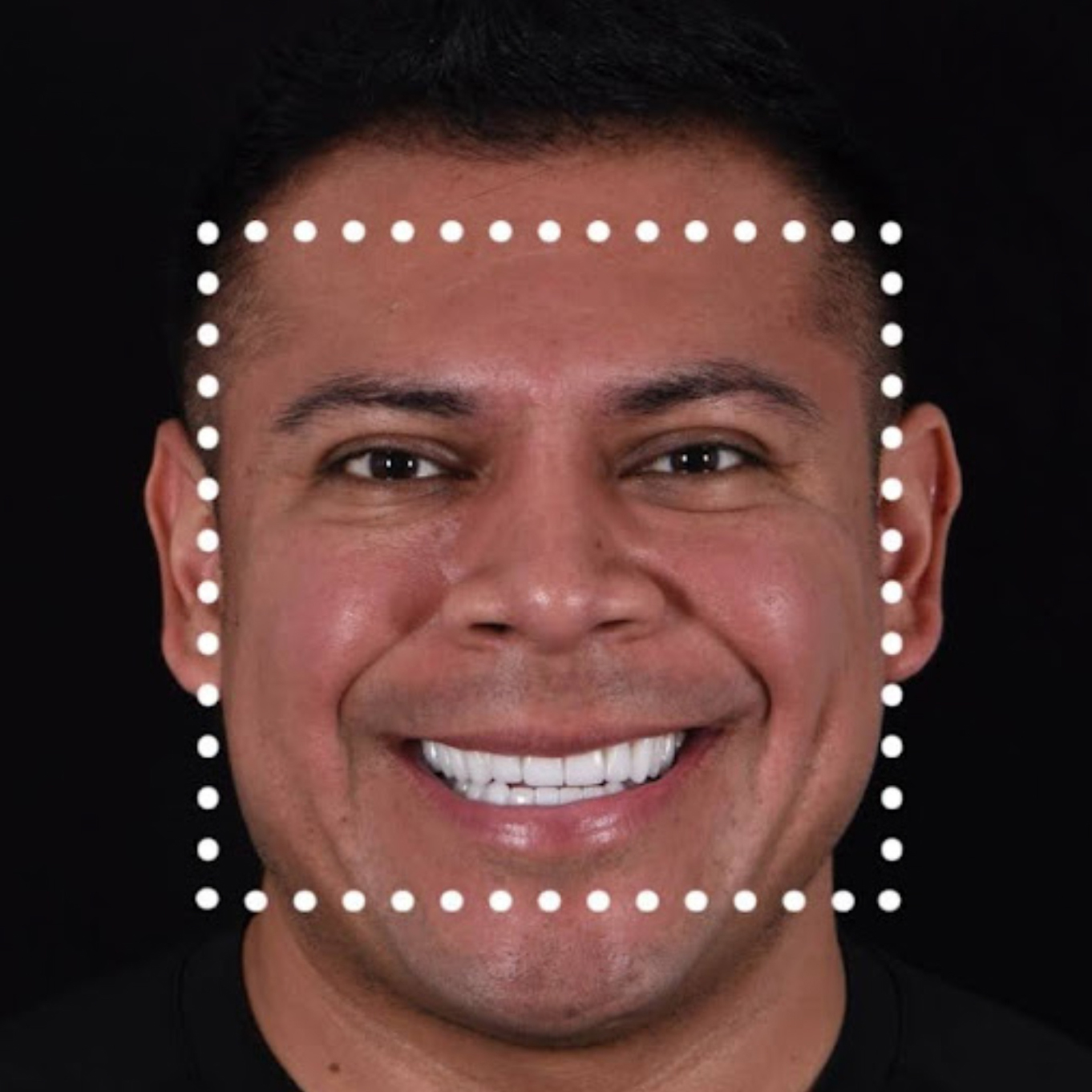
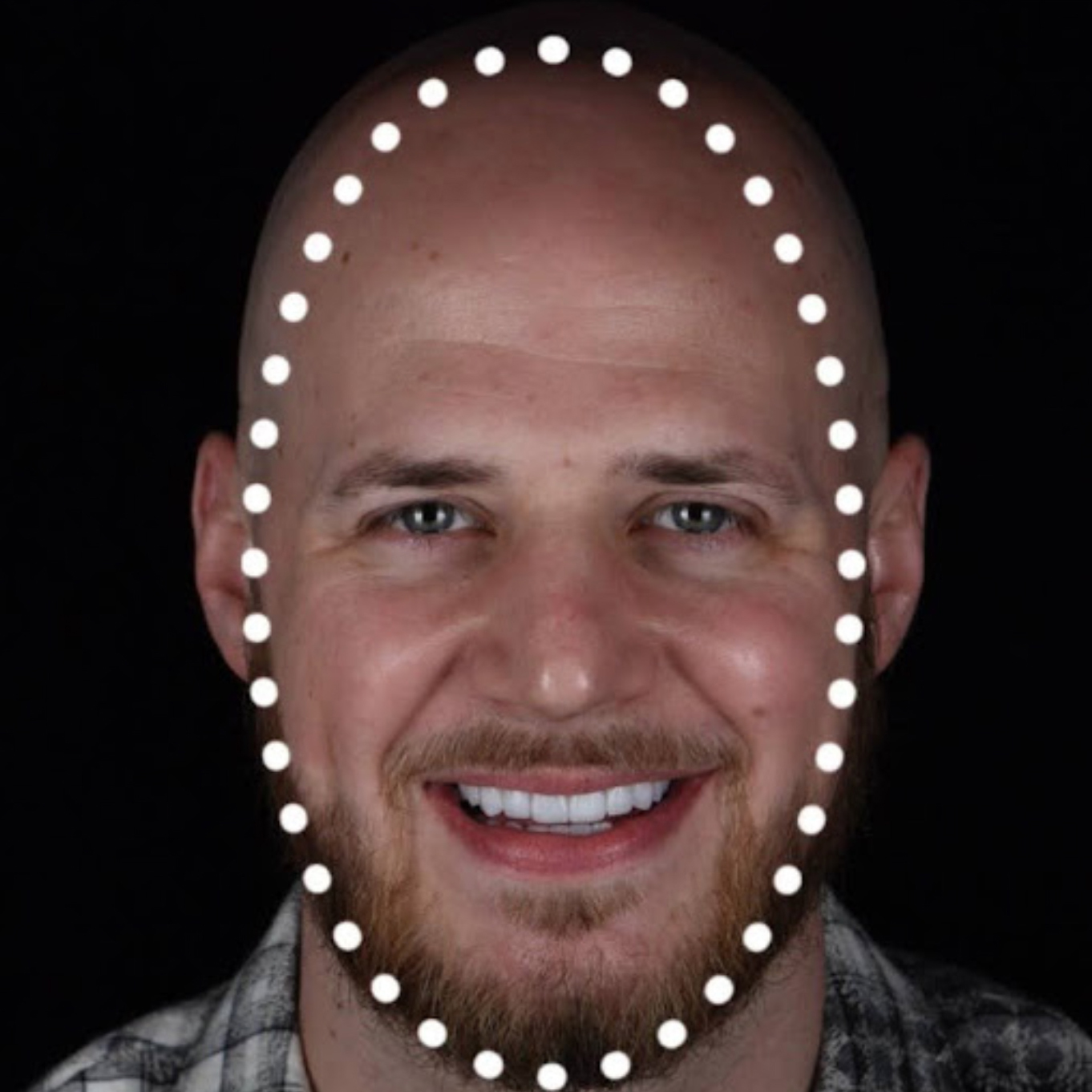
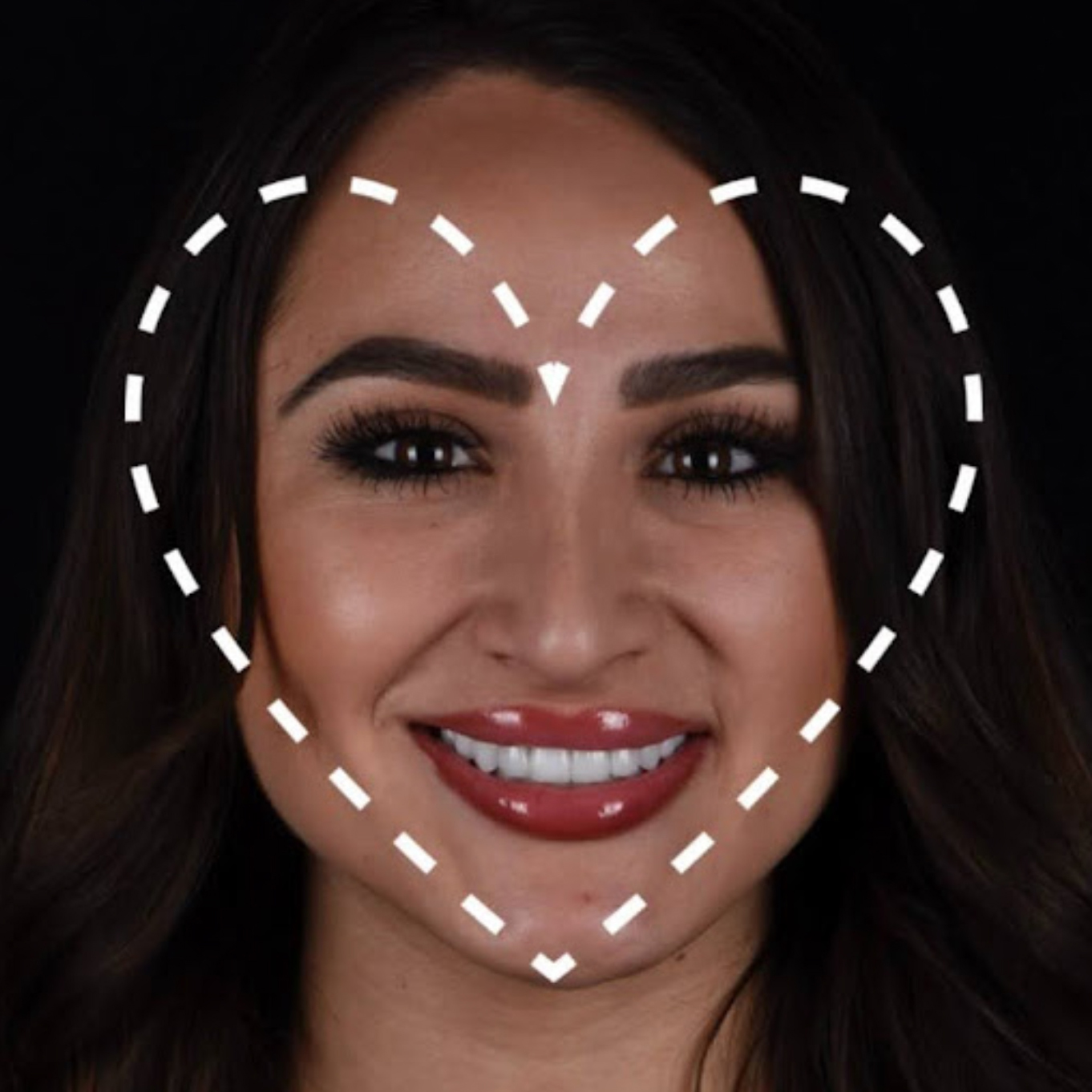
Yes — face shape is one of the most important variables in porcelain veneer design, and matching tooth shape to facial structure is what separates a natural-looking smile from one that looks generic or "done."
For his patients in Los Angeles and beyond, Dr. Chirag Patel uses face-shape analysis as part of every porcelain veneer consultation. The goal is not to change the patient's face — it is to design veneers that complement the existing facial features, lip dynamics, and jaw structure. Think of it the same way you would think about a haircut or sunglasses: the right shape brings everything into balance.
The five face shape categories below summarize how Dr. Chirag Patel approaches veneer design for patients across Beverly Hills and Greater Los Angeles. Final shape, length, and contour are always confirmed during the digital smile design and wax-up phase, before any porcelain is fabricated.
| Treatment | Coverage | Enamel Removed | Lifespan | Best for |
|---|---|---|---|---|
| Porcelain Veneers | Front surface only | 0.3-0.7 mm | 10-20 years | Aesthetic smile redesign across multiple teeth |
| No-Prep Veneers | Front surface only | 0-0.3 mm | 10-20 years | Mildly undersized or worn teeth with favorable anatomy |
| Full-Coverage Crowns | Entire tooth | 1.5-2.0 mm | 10-15 years | Structurally compromised teeth, post-root-canal |
| Composite Bonding | Targeted area only | Minimal to none | 4-8 years | Small chips, minor reshaping on a budget |
| Professional Whitening | None | None | 6-18 months per cycle | Surface stain only — does not change shape |
| Orthodontics + Whitening | None | None | Permanent if retained | Crookedness and color without restorations |
FACE SHAPE
Round
FEATURES
Fuller cheeks, softer angles, similar face width and length
BEST VENEER STYLE
Longer, more squared or oval-shaped teeth
DESIGN GOAL
Add vertical length and definition; subtly elongate the face
FACE SHAPE
Square
FEATURES
Defined jawline, angular features, strong facial structure
BEST VENEER STYLE
Rounded edges and subtle contours; gentle incisal curves
DESIGN GOAL
Soften the boldness of features and balance the strong jaw
FACE SHAPE
Oval
FEATURES
Balanced proportions, softly tapered, most versatile face shape
BEST VENEER STYLE
Customizable — bold, soft, wide, or narrow per the patient
DESIGN GOAL
Shape the smile around personality and aesthetic preference
FACE SHAPE
Heart
FEATURES
Wider forehead, narrower chin, often delicate lower face
BEST VENEER STYLE
Shorter, slightly rounded teeth; nothing too long or dominant
DESIGN GOAL
Complement the face without drawing attention downward
FACE SHAPE
Diamond
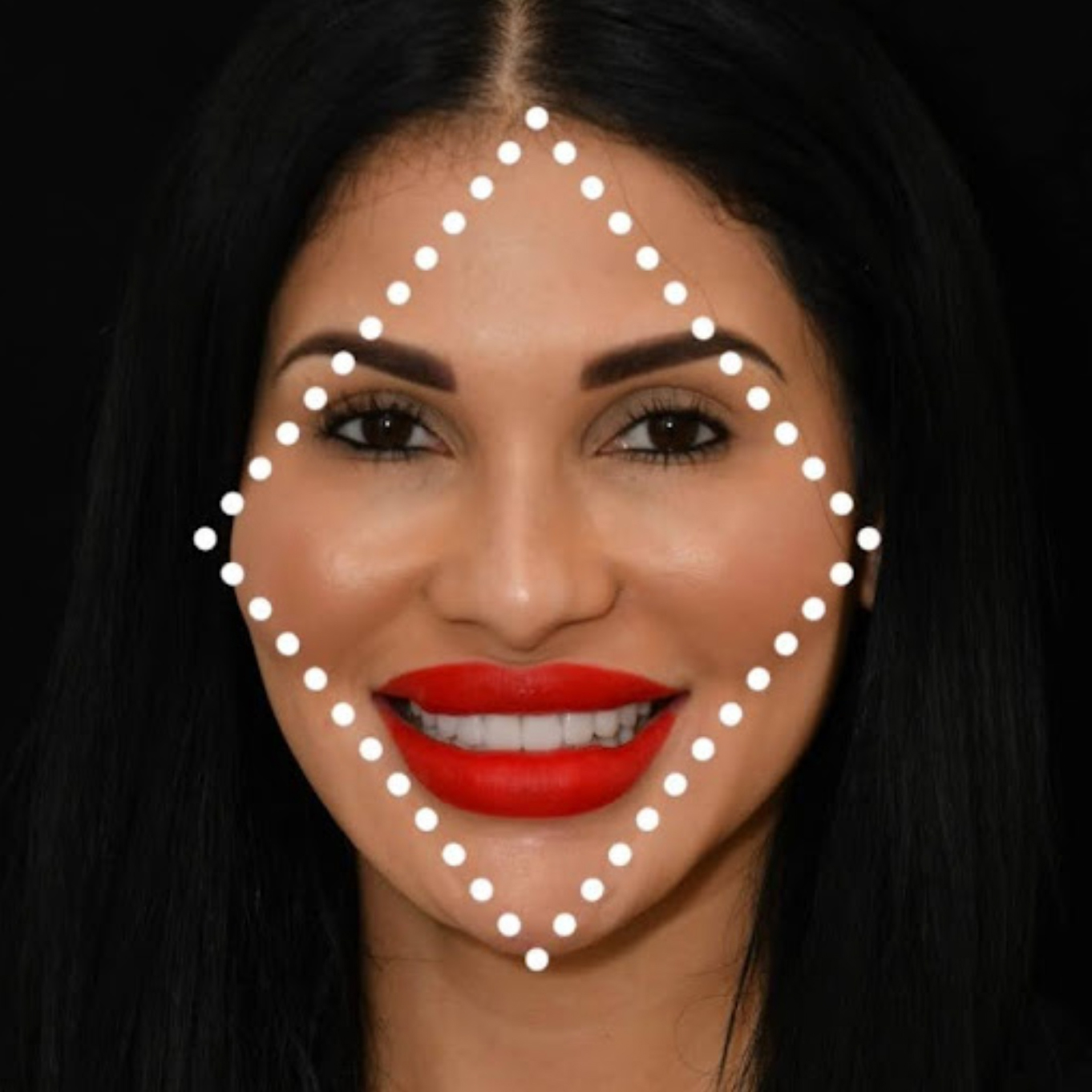
FEATURES
High cheekbones, narrow forehead, narrow chin
BEST VENEER STYLE
Rounded, slightly wider teeth with soft curves
DESIGN GOAL
Soften sharp features and add balance to angular structure
Most patients do not know their exact face shape — and that is completely fine. Dr. Chirag Patel reviews face shape, lip dynamics, smile line, and tooth proportions during every consultation at Smiles by Dr. P in Beverly Hills, Los Angeles. The proposed veneer shape is then previewed digitally and as a physical wax-up before any enamel work begins, so patients see exactly how their new smile complements their features. |
“His work is super natural but what I like most of all is that he doesn’t have a cookie cutter design. He customizes a smile for his patients individually, not to mention he is very detail oriented and I love that!” GOOGLE REVIEW BY GH
Q. Beyond face shape, what else affects porcelain veneer design by Dr. Patel at his Beverly Hills cosmetic dental practice?
Porcelain veneer design at Smiles by Dr. P considers face shape together with five additional aesthetic variables — because the most natural-looking smile is the one that fits the whole face, not just the teeth.
Dr. Chirag Patel evaluates the following during every smile design appointment:
- Lip dynamics — how the lips move and frame the teeth when speaking, smiling, and at rest
- Smile line — the curve of the upper incisal edges relative to the lower lip
- Gender characteristics — subtle differences in tooth shape, edge angle, and length that read masculine or feminine
- Tooth proportions — width-to-length ratios of central incisors and the progressive size gradient across the smile zone
- Skin tone and shade — selecting porcelain shade that complements complexion, never over-bright against natural skin tone
Texture, translucency, length, and shade are then specified to Dr. Patel's master ceramist for hand-layered fabrication. This level of customization is the difference between a Beverly Hills smile makeover and a generic veneer case.
HOW MANY VENEERS DO YOU NEED — THE 4-8-10 RULE
Q. What is the 4-8-10 rule for porcelain veneers?
The 4-8-10 rule is a smile-design guideline that recommends placing porcelain veneers on either four, eight, or ten teeth depending on how many teeth are visible in the patient's smile and how much correction the case requires.
The numbers exist because they match how many teeth typically show in different smile widths. Stopping mid-arch creates a visible color or shape break, which is why dentists group veneers in these specific counts. The 4-8-10 framework helps patients and Dr. Chirag Patel reach a customized treatment plan that looks natural — not manufactured or "over-veneered."
At Smiles by Dr. P in Beverly Hills, the 4-8-10 rule is used as a starting framework, not a rigid mandate. Some cases need six, twelve, or even sixteen veneers depending on bite, smile width, and how much correction is required. The right number is always determined during the consultation, after Dr. Patel reviews the patient's smile zone, facial features, and aesthetic goals.
| Option | Teeth Covered | Best for | Smile Type |
|---|---|---|---|
| 4 Veneers | The four upper front teeth (two central + two lateral incisors) | Minor cosmetic concerns – small chip, slight discoloration, single-tooth issue, or small midline gap | Subtle, closed-lip smiles that show only the front four teeth |
| 8 Veneers | The four upper front teeth plus the two canines, OR all four upper + four lower incisors | The most common choice – balanced symmetry, moderate discoloration, mild misalignment, or full smile-zone redesign | Standard smiles where lateral incisors and canines are visible |
| 10 Veneers | Four incisors plus canines plus the two first premolars on the upper arch (or upper and lower combined) | Full smile makeover – severe discoloration, large gaps, multiple chips, or deeper cosmetic correction | Broad, expressive smiles where premolars also show |
| 12+ Veneers | Full upper arch (and sometimes lower) when the smile zone is unusually wide | Cases where the back teeth show prominently when laughing or speaking | Wide smiles; cinematic full-arch transformations |
The honest truth: a dentist who recommends twelve or sixteen veneers to every patient is not following the 4-8-10 rule. Dr. Chirag Patel located in Los Angeles often recommends four or eight veneers when twelve would be excessive. The right number is determined by smile width, correction needed, and what looks natural — never by what is most profitable.
Q. How does Dr. Patel decide how many veneers I need?
Dr. Chirag Patel determines the right number of porcelain veneers by analyzing three specific factors during the Beverly Hills veneers consultation: smile zone width, correction depth, and aesthetic goal.
Three questions inform the recommendation:
How wide is your smile zone? — Some patients show only four front teeth when they smile; others show ten or more. The veneer count should cover the full visible zone, never stopping mid-arch.
How much correction does the case need? — A single chipped tooth may need only one or two veneers. A case combining discoloration, worn edges, and small gaps usually needs eight or more for uniform results.
What is the goal — refresh or full transformation? — A refresh of an already-attractive smile often uses four to eight veneers. A full smile makeover almost always uses eight to ten.
Patients at Smiles by Dr. P | Chirag Patel, DMD in Los Angeles see the proposed veneer count and design as part of the 3D printed smile preview before any treatment begins. This means there are no surprises, no upsells, and no decisions made under pressure.
Wondering how many veneers your smile needs?
Schedule a veneer consultation with Smiles by Dr. P | Chirag Patel, DMD in Los Angeles
THE VENEER PROCEDURE IN LOS ANGELES
Q. What is the porcelain veneers procedure, step by step?
A typical porcelain veneer case at Smiles by Dr. P is completed in two to three visits over four to six weeks. Each visit has a specific clinical purpose.
Visit 1 — Consultation & Smile Discussion (60–90 minutes)
- Comprehensive smile evaluation, digital intraoral scanning, photographs, and 3D imaging
- Facial-aesthetic review of tooth shape, gumline, lip dynamics, and skin tone
- Transparent treatment plan and financing options reviewed
Visit 2 —Prototype Try-In & Testing followed by aesthetic approval (customised for every patient)
- Physical wax-up fabricated so the patient can preview the proposed smile
- Local anesthesia for full comfort
- Minimal enamel preparation — 0.3 to 0.7 mm per tooth, conservatively guided by digital design
- Precise digital impressions sent to Dr. Patel's master ceramist lab partner
- Hand-shaped temporary veneers placed so the patient can live with the proposed smile shape
- Aesthetic Approval: Detailed shade, translucency, and layering instructions communicated for the patient's unique case after thorough discussion with the patient based on the prototype lightly bonded to their teeth.
Visit 3 —Final Veneer Cementation/ Bonding
- Temporaries removed and teeth gently cleaned
- Try-in paste used to verify shade, opacity, and fit before final bonding
- Final porcelain veneers bonded under rubber dam or Isolite isolation
- Shade matching verified under multiple light conditions
- Bite, edges, and contacts refined; final polish and photographs
Follow-Up Care
- Post-op visit scheduled within two weeks to confirm comfort and fit
- Custom night guard recommended when bruxism is present
- Home care review
Always ask for a prototype smile that gives you a preview of your smile based on your facial features. This is a non-negotiable part of Dr. Patel's process at Smiles by Dr. P in Beverly Hills — patients approve the proposed smile before final fabrication begins.
Q. Is getting porcelain veneers painful? What is recovery like?
The porcelain veneers procedure is performed under local anesthesia and is most often described as no more uncomfortable than a standard filling.
After the anesthesia wears off, mild sensitivity to hot and cold is normal for three to fourteen days. There is no meaningful downtime — most patients return to work the same day or the next morning.
What to expect after bonding:
- Mild tooth sensitivity for one to fourteen days
- Slight gum tenderness around the bonded edges
- A brief adjustment period — usually resolves within a week
- Avoid very hard or sticky foods for the first 48 hours
LONGEVITY & COST OF PORCELAIN VENEERS IN BEVERLY HILL, LOS ANGELES
Q. How long do porcelain veneers last?
Porcelain veneers placed at Smiles by Dr. P typically last 10 to 20 years with proper home care, regular cleanings, and night-guard use when indicated.
Over 90% of high-quality porcelain veneers remain intact at the 10-year mark. The porcelain itself does not re-stain over time, so the color of your smile remains stable. Longevity depends primarily on bonding technique, material selection, and the patient's bite and habits.
To maximize longevity:
Wear a custom night guard if you grind your teeth — bruxism is the leading cause of premature veneer failure
- Avoid biting hard objects (ice, pens, fingernails) with veneered teeth
- Maintain professional cleanings every six months
- Use a non-abrasive toothpaste — some whitening pastes can dull porcelain glaze over time
Dr. Chirag Patel, a top rated Los Angeles cosmetic dentist uses premium-grade porcelain labs and strict bonding protocols — including proper isolation techniques and shade matching under multiple light conditions — factors that meaningfully extend veneer lifespan compared to lower-cost alternatives.
Q. Do porcelain veneers stain over time or change color?
The porcelain itself does not stain. Porcelain is non-porous and biocompatible, so high-quality porcelain veneers placed at Smiles by Dr. P keep their original shade for the full 10 to 20 year lifespan.
This is one of the most meaningful long-term advantages of porcelain veneers over composite bonding. Composite resin is porous and gradually picks up stain from coffee, red wine, tea, tobacco, and ordinary diet — which is why composite veneers and bonding typically dull or yellow within four to eight years. Porcelain, by contrast, has a glazed surface that resists staining the same way a ceramic plate resists staining.
What can change over time — and how Dr. Chirag Patel addresses each:
- Bonding margin staining — the cement line where the veneer meets the natural tooth can pick up faint surface stain over many years. It is polished during routine cleanings.
- Adjacent natural teeth shifting in color — the surrounding non-veneered teeth can yellow with age, making veneers look comparatively brighter. It is addressed with periodic whitening of the natural teeth.
- Surface glaze wear — abrasive whitening toothpastes can dull the porcelain glaze over decades. Avoided by using a non-abrasive toothpaste.
- Color appearance under different lighting — veneers can read slightly warmer or cooler depending on ambient light. This is why Dr. Patel verifies shade under multiple light conditions before final bonding.
Habits that protect veneer color long-term: regular professional cleanings every six months, a non-abrasive toothpaste, a custom night guard when bruxism is present, and moderation of deeply staining substances (especially red wine and tobacco) for the natural teeth around the veneers. The porcelain shade itself is locked in at fabrication and does not respond to whitening, which is why initial shade selection is one of the most important decisions in the case.
Q. How much do porcelain veneers cost in Beverly Hills?
In Beverly Hills and the greater Los Angeles area, high-quality porcelain veneers typically range from $2,000 to $3,500 per tooth, depending on material, complexity, and the master ceramist partnership.
Most patients opt for a coordinated set of 4 to 10 veneers — usually the upper teeth that show when smiling — for the most natural, uniform result. A typical full upper-arch porcelain veneers case in Beverly Hills therefore ranges from approximately $16,000 to $35,000.
Cost varies based on:
- Number of teeth treated
- Porcelain material selected — feldspathic porcelain, lithium disilicate (e.max), or layered ceramics
- Complexity of the smile design and any pre-treatment required
- Whether the case includes gum contouring, whitening, or orthodontic refinement first
Q. Are porcelain veneers covered by dental insurance?
Dental insurance rarely covers porcelain veneers since they are considered cosmetic.
Smiles by Dr. P offers flexible financing through CareCredit, Alphaeon, Lending Club, and Cherry, with 0% promotional periods available for qualified patients. Exact pricing is provided during the consultation, after Dr. Patel evaluates the case.
Ready to design your smile?
Schedule a consultation with Dr. Chirag Patel — see your outcome digitally before any treatment begins.
AFTERCARE — HOW TO TAKE CARE OF YOUR PORCELAIN VENEERS
Q. How do I take care of porcelain veneers after they are bonded?
Porcelain veneer aftercare is straightforward and centers on five habits: meticulous brushing and flossing, a custom night guard when indicated, regular preventive dental visits every six months, periodic whitening of the non-veneered teeth to keep shade uniform, and avoiding the small handful of habits that can damage porcelain.
At Smiles by Dr. P in Beverly Hills, Dr. Chirag Patel provides a detailed aftercare protocol after every porcelain veneer case. Whether the patient received traditional or no-prep veneers, the maintenance principles are the same — and they directly determine whether a case lasts 10 years or 20+ years. The five aftercare pillars are summarized in the table below, then explained in depth in the questions that follow.
Patients across Greater Los Angeles, Orange County, the Antelope Valley, and the Central Valley follow this exact protocol — and Dr. Patel's traveling and international patients receive a written aftercare plan at the bonding visit so the routine continues at home.
| Aftercare Pillar | Frequency | Why it Matters |
|---|---|---|
| Brushing & Flossing | Brush 2? daily for 2 min; floss daily | Prevents cavities forming around or under the veneer margins, which is the single most common cause of veneer failure |
| Night Guard / Occlusal Guard | Every night during sleep | Protects veneers from clenching and grinding forces – bruxism is the leading cause of premature veneer chipping or fracture |
| Professional Cleanings | Every 6 months minimum; X-rays annually | Hand-scaler cleanings and mindful electric cleanings to preserve veneer margins; X-rays catch cavities, cracks, or infections early |
| Whitening of Natural Teeth | Periodic, as the natural teeth shift in shade | Veneers are color-stable for life; non-veneered teeth can yellow with age. Whitening keeps the smile uniform |
| Avoiding Damaging Habits | Daily awareness | Ice, hard candies, fingernail biting, pen chewing, and using teeth as tools are the most common causes of veneer damage |
Q. Brushing and flossing — how should I brush and floss with porcelain veneers?
Brush twice a day for a minimum of two minutes with a soft-bristled toothbrush, angle the bristles toward the gum line, and floss at least once daily. The brushing technique is identical to natural teeth — the goal is to keep the gum line free of plaque and food deposits.
This is the single most important aftercare habit. Porcelain veneers cover only the front surface of the tooth, so the natural tooth structure underneath, around, and behind the veneer can still develop cavities if plaque is allowed to accumulate. A cavity that forms under a veneer margin requires the veneer to be removed and the tooth restored — which is preventable with consistent brushing and flossing.
Dr. Chirag Patel's brushing and flossing recommendations for porcelain veneers:
- Brush twice daily, two minutes minimum, with a soft-bristled toothbrush (manual or electric)
- Angle bristles toward the gum line at roughly 45 degrees, just as with natural teeth
- Pay special attention to the gum line around the veneers, where food and bacteria can collect
- Use a non-abrasive toothpaste — some whitening pastes can dull the porcelain glaze over many years
- Floss daily by wrapping the floss around the tooth and gently sliding it down both sides
- A water flosser (Waterpik) used once daily provides excellent additional cleaning around veneer margins
Q. Do I need to wear a night guard with porcelain veneers?
Yes — a custom night guard (also called an occlusal guard) is strongly recommended for every porcelain veneer patient and is essential for any patient with even mild clenching or grinding tendencies.
Clenching and grinding (bruxism) often occur unconsciously during sleep and can generate hundreds of pounds of pressure on the teeth. Porcelain used in dental veneers is harder than natural tooth structure, but it is not immune to fracture under repeated heavy bite forces. The night guard prevents the upper and lower teeth from coming together and exerting pressure on the veneers, and it guides the jaw into a more relaxed position so the muscles can rest.
What a custom night guard does for porcelain veneers:
- Distributes bite force evenly so no single veneer absorbs concentrated pressure
- Prevents micro-fractures in the porcelain that can develop over years of unaddressed grinding
- Protects veneer margins from chipping at the incisal edge
- Relaxes the masseter and temporalis muscles, reducing morning jaw soreness
- Worn only at bedtime — not during the day
Dr. Chirag Patel in Los Angeles fabricates a custom occlusal guard using the best 3D printing technology for every porcelain veneer patient who needs one. Off-the-shelf night guards from a pharmacy do not fit precisely enough to protect veneers reliably — a custom guard from the dentist is the right tool.
Q. How often should I see the dentist after getting porcelain veneers?
Schedule professional cleanings every four to six months and a full oral evaluation with X-rays once a year. These visits are non-negotiable for long-term veneer health.
Regular cleanings keep the veneer margins polished and free of plaque, and they give the dentist the chance to catch any issue — small chip, gum recession, cavity forming on an adjacent natural tooth — early enough to address it without replacing the veneer.
What to expect at six-month visits with porcelain veneers:
- Professional cleaning with hand scalers around the veneers — not ultrasonic or electric scalers, which can damage the porcelain glaze
- Inspection of all veneer margins for early signs of marginal staining, recession, or wear
- Bite check to confirm no shifting has occurred and the night guard still fits
- Annual X-rays to evaluate for cavities, cracks, or infections in the non-veneered tooth structure underneath and around the veneers
- Polishing of any minor surface dullness with porcelain-safe paste
Dr. Chirag Patel personally reviews every porcelain veneer patient's follow-up imaging and is available for aesthetic refinements throughout the life of the smile. Patients should always request hand scalers and porcelain-safe polish at cleaning appointments, whether at Smiles by Dr. P or another office.
Q. Should I whiten my teeth after getting porcelain veneers?
Porcelain veneers are color stable and do not change color over time. Therefore, teeth with veneers do not need whitening as they help achieve a permanent color enhancement.
A periodic whitening of the non-veneered teeth is recommended over the long term to keep the natural teeth color-matched to the veneers, since porcelain is color-stable for life but natural enamel can yellow with age.
Porcelain veneers do not respond to whitening agents at all — the shade is locked in at fabrication. Natural teeth, however, gradually shift in color over years and decades. If the non-veneered teeth become noticeably darker than the veneers, a visible shade break can develop between the front of the smile and the side or back teeth.
Dr. Chirag Patel's porcelain veneer whitening guidance at his Beverly Hills Cosmetic dental practice:
- Wait at least 2 weeks after final veneer bonding before beginning any whitening, and only when sensitivity has resolved and the gums are fully healed
- Use in-office or take-home whitening trays — over-the-counter strips can be inconsistent and irritating
- Whiten only the natural teeth that did not receive veneers; the porcelain will not change shade
- Plan maintenance whitening every 12 to 24 months as needed to keep the smile uniform
- Discuss the whitening schedule with Dr. Patel during a follow-up visit so it is timed correctly with your case
If whitening trays were dispensed at the post-op visit at Smiles by Dr. P, patients can begin whitening two weeks after their final veneer placement — as long as no sensitivity remains and the gums are completely healed.
Q. What habits should I avoid with porcelain veneers?
Porcelain veneers are strong, but a small number of common habits can damage them over time. Avoiding these habits is the simplest way to protect the investment.
The most common habits Dr. Chirag Patel asks porcelain veneer patients to avoid:
- Chewing ice — ice is harder than most patients expect and is one of the leading causes of porcelain chipping
- Biting hard candies, hard nuts in the shell, popcorn kernels, or any food that requires concentrated bite force
- Biting fingernails — a repetitive low-grade force that can chip veneer edges over years
- Chewing on pens, pencils, or other objects as a stress habit
- Using teeth as tools — opening packages, tearing tape, holding objects, cutting thread
- Unaddressed clenching or grinding without a night guard
- Abrasive whitening toothpastes used long-term, which can dull the porcelain glaze
None of these habits will damage a veneer in a single incident under normal circumstances. The risk is cumulative — repeated low-grade force over years is what leads to chipping or fracture. Patients who are aware of these habits and break them early protect their porcelain veneer investment for the long term.
Already have veneers and want a check-up in Los Angeles?
Schedule a cleaning and check-up with Dr. Chirag Patel — hand-scaler cleanings, porcelain-safe polishing, and full aesthetic review.
AESTHETICS FOR PORCELAIN VENEERS
Q. Will my porcelain veneers look natural?
Porcelain veneers at Smiles by Dr. P are layered shade-by-shade by a master ceramist to mimic the translucency, surface texture, and color gradients of natural enamel.
Shade matching is verified under multiple light conditions before final bonding — daylight, office light, and warm interior light — so the veneers look natural in every setting the patient lives in. Most patients report that friends and family notice their smile looks refreshed without identifying it as veneers.
The difference between natural-looking veneers and veneers that look "done" comes down to four things: master ceramist craftsmanship, custom opacity and layering for each patient's underlying tooth color, facial-aesthetic design (rather than tooth-only design), and a try-in step before final bonding so adjustments can still be made.
“Going in, I was so nervous because I wanted to have very natural looking teeth and was scared of the outcome, I’ve seen people with veneers that look very artificial and was scared of coming out with that result. But after meeting Dr. Patel, and after he explained everything to me, my worries went away immediately!! He listens to everything you say and takes it into consideration and assures certain things you want within your smile are incorporated. It was such a flawless process and my results are AMAZING!! My teeth look beautiful and natural which is exactly what I wanted!!”- Google Review by ML
COLOR & SHADE SELECTION FOR PORCELAIN VENEERS
Q. How is the color of porcelain veneers chosen?
Porcelain veneer color is chosen by matching shade, translucency, and surface character to the patient's complexion, eye color, hair tone, and the surrounding natural teeth — not by picking a number off a shade chart.
At Smiles by Dr. P in Beverly Hills, Dr. Chirag Patel approaches color selection as a facial-aesthetic decision. The same porcelain shade can read beautifully on one patient and look stark or artificial on another, depending on skin tone and lighting environment. The goal is a smile that looks like an enhanced version of the patient's natural enamel — never a generic ultra-white set of teeth.
Dr. Chirag Patel's porcelain veneer color selection process:
- Baseline shade analysis using the VITA Classical and VITA 3D-Master shade guides under controlled lighting
- Digital photographs taken with calibrated color profiles for the master ceramist to reference
- Skin tone, eye color, and hair tone evaluated to recommend a shade that complements the patient's overall complexion
- Translucency and incisal-edge character mapped to mimic the natural light-reflecting properties of real enamel
- Surface texture (high-gloss, satin, or natural micro-texture) chosen to match age and aesthetic preference
- Shade verified under multiple light conditions — daylight, office light, warm interior light — at the try-in step
Because porcelain veneer shade is locked in at fabrication and does not respond to whitening, this is one of the most important decisions in the case. Dr. Patel reviews shade options openly during the consultation, with try-in verification before any veneer is permanently bonded.
Q. What shade of porcelain veneer should I choose — natural or Hollywood white?
The most flattering porcelain veneer shade is the one that looks natural on the patient's complexion under everyday lighting — typically a shade or two brighter than the patient's natural enamel, never a uniform ultra-white.
The defining cosmetic dentistry trend for 2026 in Beverly Hills and Greater Los Angeles is a clear move away from the flat "Hollywood white" aesthetic toward what is sometimes called bio-mimetic or achromatic-realism design. Patients now prefer shades that read as healthy, refreshed enamel rather than monochromatic bright teeth.
How Dr. Chirag Patel at guides shade choice:
BL1 Ultra-bright bleach white
The brightest shade in the bleach range. Often too stark for most patients under daylight; reserved for very specific high-camera professions when paired with careful translucency design to avoid a flat, opaque appearance.
BL2 Bright bleach white
A step warmer than BL1 but still distinctly in "bleach" territory. Best suited to fair complexions and patients who genuinely want a brilliant, high-contrast smile without crossing into BL1's stark zone.
BL3 Bright but natural-leaning
Visibly brighter than most patients' starting shade while still reading natural under daylight. The most popular choice for patients who want a clear "I brightened my smile" effect without it looking like veneers.
OM1 Natural bright white
The classic "healthy smile" shade, offering a polished bright-white appearance that remains timeless and completely natural. Reads as well-cared-for enamel rather than cosmetic dentistry.
OM2 Soft balanced natural
A subtly warm bright shade designed for patients seeking a refined, age-appropriate enhancement with natural vitality. Blends beautifully with adjacent natural teeth in partial smile makeovers.
OM3 Warm luminous natural
A warmer, softer white selected for the most natural blend with existing teeth and realistic appearance under warm interior lighting. Often chosen by patients who want enhancement without any visible whitening signal.
The right answer depends on age, skin tone, eye color, profession, and how the patient wants to be perceived. Dr. Patel shows multiple shade try-ins side-by-side during the smile design phase so patients can see exactly how each option reads under daylight, office light, and warm light before committing.
| SHADE | APPEARANCE | BEST FOR | AGES WELL? |
|---|---|---|---|
| BL1 | Ultra-bright, brilliant white, minimal warmth | High-camera professions, specific commercial use cases | Can read stark over time as natural teeth around them yellow |
| BL2 | Bright bleach white with a hint more warmth than BL1 | Fair complexions, patients wanting clear bleach-range brightness | Reasonable – softer than BL1 as adjacent teeth mature |
| BL3 | Bright and crisp, with subtle natural warmth | Refreshed-but-natural appearance; the most popular "bright" choice | Yes – ages gracefully on most complexions |
| OM1 | Natural bright; the classic "healthy smile" shade | Patients wanting a polished refresh that reads completely natural | Excellent – the most timeless range |
| OM2 | Warmer natural; soft and age-appropriate | Patients matching existing natural teeth or seeking subtle enhancemen | Excellent – reads natural at every age |
| OM3 | Warmer, more golden natural tones | Matching existing yellowed natural teeth without whitening first | Yes – most natural under warm interior lighting |
The single most common shade-selection regret is selecting the color based on magazine trends. A shade that looks dramatic in the dental office can look stark in daylight, in photographs, and against the patient's skin tone. Dr. Chirag Patel verifies shade under daylight, office light, and warm interior light at the try-in step — before final bonding — so this is the moment to look closely, take photographs, and confirm the shade reads natural in every setting.
Q. Can I whiten my natural teeth to match brighter veneers?
Yes — patients who want a brighter porcelain veneer shade than their natural enamel often whiten the surrounding non-veneered teeth first, then have the veneers fabricated to match the post-whitening shade.
This is a common sequence at Smiles by Dr. P. Porcelain veneers do not respond to whitening at all — their shade is locked in at fabrication. So if a patient wants a noticeably brighter smile, the order of operations matters: whiten first, then fabricate veneers in the brighter shade to match.
Dr. Chirag Patel's typical shade-coordination sequence:
- Professional in-office or take-home whitening of all teeth that will not receive veneers
- Two to four weeks of color stabilization after whitening completes
- Final shade selected and verified with the patient under multiple light conditions
- Porcelain veneers fabricated to match the newly stabilized shade
- Maintenance whitening of the natural teeth as needed to keep the smile uniform over time
Patients who skip the whitening step and ask for an ultra-bright veneer shade on top of yellowed natural teeth often regret the visible shade break between the veneers and the rest of the smile. Dr. Patel discusses this trade-off openly during the consultation.
TYPES OF PORCELAIN VENEERS
Q. What are the different types of porcelain veneers, and how do they compare?
Porcelain veneers come in several distinct material and preparation types — each with different strengths, aesthetics, and indications. Dr. Chirag Patel selects the type based on each patient's enamel, bite, underlying tooth color, and aesthetic goals.
At Smiles by Dr. P in Beverly Hills, the six most common veneer types are summarized in the table below. Material selection is never a default recipe — it is engineered case-by-case in collaboration with Dr. Patel's master ceramist partner.
| TYPE | THICKNESS | STRENGTH | AESTHETICS | BEST FOR | LIFESPAN |
|---|---|---|---|---|---|
| Feldspathic Porcelain | 0.3-0.5 mm | Moderate | Highest translucency, most lifelike | Front-tooth aesthetic cases where natural light reflection is critical | 10-20 years |
| Lithium Disilicate (e.max) | 0.3-0.7 mm | High ≈ 400-500 MPa) | Excellent strength + lifelike appearance | Most veneer cases; masks moderate discoloration with stable strength | 10-20 years |
| Layered Zirconia | 0.5-0.8 mm | Maximum (≈ 1,200 MPa) | Excellent durability; slightly less translucent than e.max | Heavier bites, bruxism patients, or full-coverage durability alongside aesthetics | 15-20+ years |
| No-Prep / Ultra-Thin | 0.2-0.3 mm | Moderate | Very natural when case is well selected | Mildly undersized or worn teeth with favorable anatomy; minimally invasive | 10-20 years |
| Minimum-Prep Veneers | 0.3-0.5 mm | Moderate to high | Excellent – conservative preparation preserves enamel | Patients wanting porcelain results with maximum tooth preservation | 10-20 years |
| Lumineers (Brand) | 0.2-0.3 mm | Moderate | Good – limited shade adjustability | One specific brand of no-prep veneer; not offered at Smiles by Dr. P | 10-20 years |
Q. Which type of porcelain veneer is best for me?
The best porcelain veneer type depends on the patient's underlying tooth color, bite strength, enamel thickness, and how much correction the case requires — not on price or what the lab makes most often.
How Dr. Chirag Patel typically matches type to case at Smiles by Dr. P, Los Angeles:
- Light underlying tooth color, healthy enamel, aesthetic refinement — feldspathic porcelain for maximum translucency
- Moderate discoloration or worn edges, average bite — lithium disilicate (e.max) for strength and aesthetics together
- Heavy bite, bruxism, or back-tooth involvement — layered zirconia for maximum durability
- Mildly undersized teeth, strong enamel preservation goals — no-prep or minimum-prep veneers
- Severe intrinsic staining (tetracycline, fluorosis) — higher-opacity e.max or layered ceramics with custom shade blocking
Final material selection is confirmed during the digital smile design phase, with a transparent explanation of why the chosen material best fits the case.
Q. What is the 2026 latest porcelain veneer trend in Los Angeles?
The defining porcelain veneer trend in 2026 is a clear move away from the uniform "ultra-white Hollywood" look toward natural, lifelike smile design — sometimes called bio-mimetic or "achromatic realism" aesthetics.
Patients in Beverly Hills, Greater Los Angeles, and across the country are now requesting porcelain veneers that look like an enhanced version of their own teeth — not a bright monochromatic set of teeth. The 2026 aesthetic favors subtle color variation across the smile (canines slightly warmer than central incisors), realistic translucency at the incisal edges, and softer tooth shapes designed around the patient's face.
Five porcelain veneer trends defining 2026 at Smiles by Dr. P | Chirag Patel, DMD in Beverly Hills.
- Natural shade palettes — off-whites, warm creams, and subtle amber tones replacing the flat ultra-white look
- Ultra-thin and minimum-prep porcelain — preserving more natural tooth structure with high-strength thin ceramics
- AI-assisted digital smile design — patients preview multiple smile variations before any preparation begins
- Face-shape-driven smile design — veneer shape engineered around facial features, lip dynamics, and gender characteristics
- Hand-layered master ceramist partnerships — a return to boutique craftsmanship over high-volume centralized lab work
Dr. Chirag Patel's approach reflects every one of these 2026 trends. Each porcelain veneer case at Smiles by Dr. P uses AI-supported digital smile design, hand-layered porcelain from a Beverly Hills master ceramist, and natural shade palettes selected for each patient's individual complexion and facial features.
“Beauty in nature lies in asymmetry and not a perfect symmetry and uniformity, this also holds true for every smile”- Dr. Chirag Patel, Best Rated Cosmetic Dentist in Los Angeles based on his 5 star reviews across all platforms
CANDIDACY & RISKS FOR VENEERS
Q. Am I a good candidate for porcelain veneers?
Most healthy adults who want a long-term aesthetic improvement to their smile are candidates for porcelain veneers — but Dr. Chirag Patel evaluates every case individually and will be direct if a different treatment would serve the patient better.
You are likely a good candidate if:
- You want a uniform improvement in color, shape, length, or symmetry across multiple teeth
- Your overall oral health is good — no active gum disease or untreated cavities
- Your teeth are structurally sound (not severely damaged or decayed)
- Your bite is healthy or any bite issues are being addressed
- You are an adult with fully developed teeth
- You understand that porcelain veneers are a long-term cosmetic commitment
You may not be the best candidate if:
- Your concern is a single small chip — direct composite bonding may be more conservative
- You have significantly crowded or rotated teeth — orthodontics may be the better first step
- You have severe untreated bruxism — a night guard can often make you a candidate
- You have active periodontal disease — this must be treated first
- Your teeth are severely broken down — crowns may be more appropriate than veneers
The only way to know for certain is a personalized evaluation. Dr. Patel at Smiles by Dr. P in Beverly Hills always recommends the most conservative option that achieves the patient's cosmetic goals. If porcelain veneers are not the right solution, he will say so directly.
Q. What are the risks and considerations with porcelain veneers?
Porcelain veneers are a well-established, low-risk procedure when performed by an experienced cosmetic dentist — but there are real trade-offs every patient should understand before committing.
Considerations Dr. Chirag Patel in Los Angeles reviews with every porcelain veneer patient:
- Irreversibility — Enamel removed or chemically altered for no prep veneers during preparation cannot be regrown. The teeth will always require a veneer, crown, or similar restoration on those surfaces going forward.
- Sensitivity — Some patients experience temporary sensitivity to hot and cold for one to two weeks; lasting sensitivity is uncommon when the procedure is done conservatively.
- Longevity — Porcelain veneers will eventually need replacing, typically every 10 to 20 years.
- Chipping or fracture — Modern porcelain is strong, but severe bite forces, trauma, or untreated bruxism can chip a veneer.
- Color permanence — Veneers do not respond to whitening. The color is locked in at fabrication, so shade selection must be considered carefully and in coordination with adjacent natural teeth.
- Bond strength on compromised enamel — Severe fluorosis or hypomineralized enamel can affect bond strength. Dr. Patel uses adhesive protocols engineered specifically for these cases.
- Aesthetic proportionality — Poorly designed veneers can look too white, too opaque, or unnaturally uniform. Master ceramist partnership and clinical experience matter enormously.
Wondering if porcelain veneers are the right next step?
Schedule a consultation at Smiles by Dr. P | Chirag Patel, DMD — see your smile digitally before any treatment begins.
PORCELAIN VENEER RESULTS — MINI CASE STUDIES — BEFORE & AFTER AT SMILES BY DR. P | CHIRAG PATEL, DMD
Case Studies
CASE 01
Veneer Revision Case in Los Angeles to Restore Natural Smile Harmony
Veneer Revision Case in Los Angeles to Restore Natural Smile Harmony
Patient: Female in his early 60s
Travel: Los Angeles. CA
Chief Concern: The patient wanted to replace aging veneers that did not fit her changing facial profile anymore while also improving comfort and bite function. She was looking for a more youthful look for her new smile.
Background: This patient, a woman in her early 60s from Los Angeles, presented seeking a revision of her existing upper veneers. She felt her existing restorations appeared bulky and not so bright, and uneven edge wear had begun affecting the symmetry and natural appearance of her smile over time. Her goal was to achieve a more refined youthful look while improving overall comfort and function.
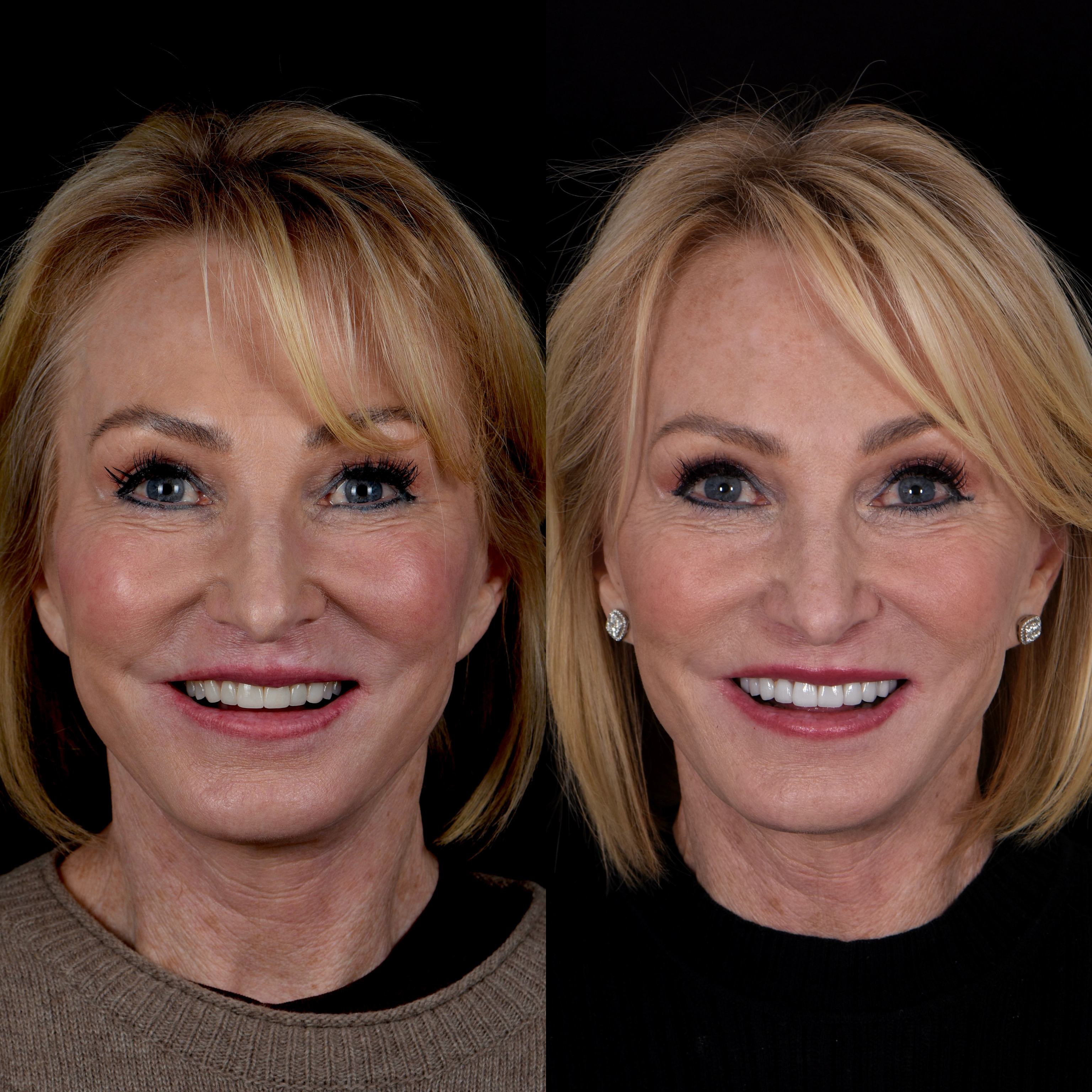
Treatment Approach: Dr. Chirag Patel completed a revision of the patient’s upper 10 veneers using custom-crafted porcelain restorations designed to enhance smile harmony and restore proper proportions. Careful facial and smile analysis guided the design process to create a softer, more natural aesthetic while also improving bite comfort and functionality.
Outcome: The final result delivered a refreshed, natural-looking smile that complemented the patient’s features without appearing overdone. At her follow-up visit, the patient shared that friends and family noticed she looked more youthful and rested, without identifying that she had cosmetic dental work completed.
CASE 02
Upper Top 10 veneers Case to Create a Brighter, More Balanced Smile in Beverly Hills
Upper Top 10 veneers Case to Create a Brighter, More Balanced Smile in Beverly Hills
Patient: Female in her early 30s
Travel: Burbank
Chief Concern: The patient was unhappy with the overall worn down appearance and color of her smile and wanted a brighter, more polished look that still appeared natural. She wanted to show her teeth more when smiling.
Background: This patient, a woman in her early 30s from Burbank, was unhappy with the overall appearance of her smile. She suffered from bruxism and as a result her teeth had worn edges. She did not show much teeth when smiling due to the wear. She wanted to restore and brighten her teeth aesthetically while maintaining a natural, believable look that complemented her facial features.
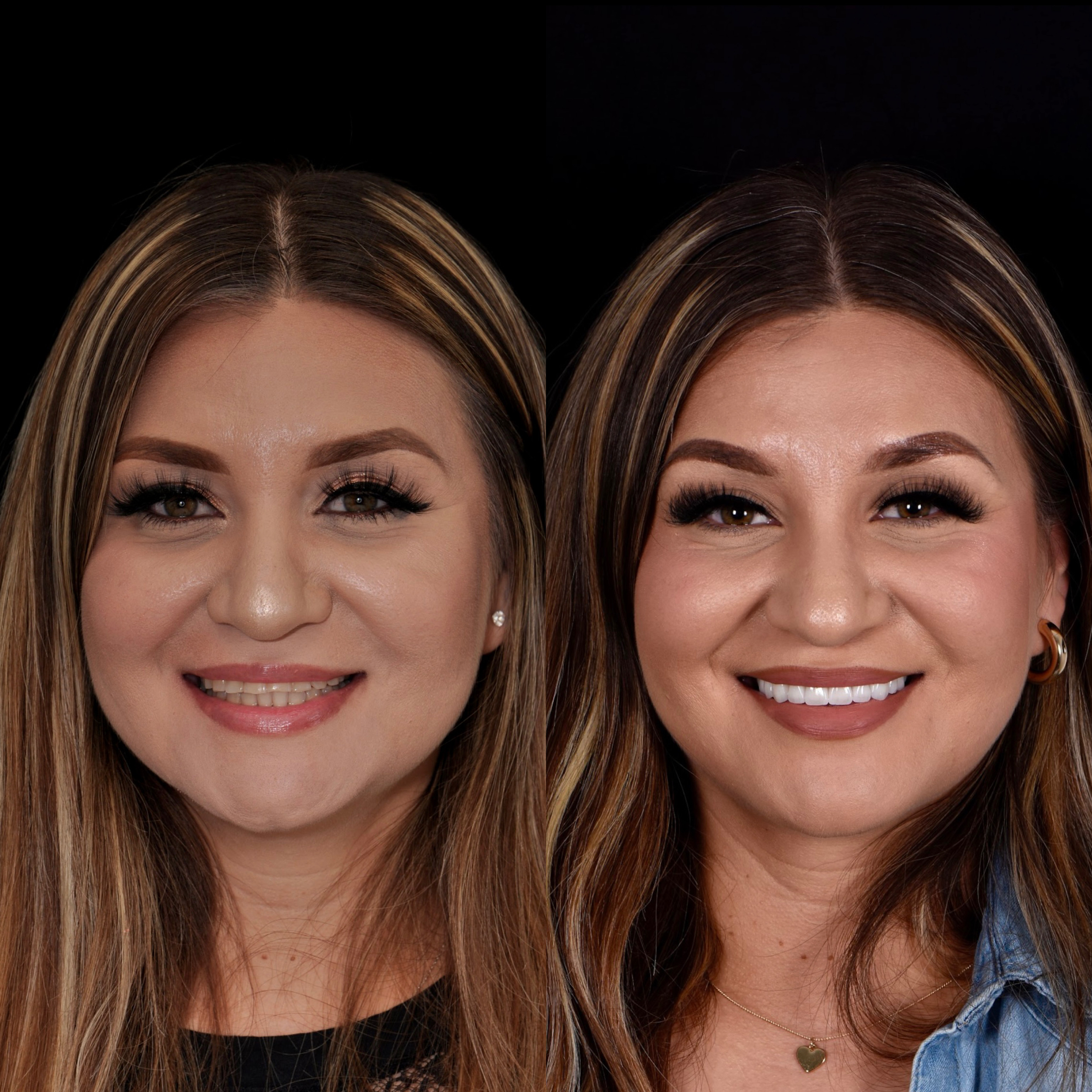
Treatment Approach: Dr. Chirag Patel planned an upper 10 veneer case using custom porcelain veneers designed to improve visibility of teeth, smile brightness, symmetry, and overall harmony. Careful smile design and facial analysis were used to create natural tooth proportions and translucency for an elegant yet subtle enhancement.
Outcome: The final result delivered a brighter, more refined smile that enhanced the patient’s confidence while preserving a highly natural appearance. At her follow-up visit, the patient shared that she loved how refreshed her smile looked without appearing overly cosmetic.
CASE 03
Enhancing Balance and Harmony Through Cosmetic Dentistry with Veneers in Beverly Hills
Enhancing Balance and Harmony Through Cosmetic Dentistry with Veneers in Beverly Hills
Patient: Female in her early 20s
Travel: Riverside, CA
Chief Concern: The patient was unhappy with the uneven appearance of her smile and wanted improved symmetry without sacrificing a natural look.
Background: This patient, a woman in her late 20s from Riverside, was concerned about the uneven appearance of her smile. She felt variations in tooth shape and proportions created noticeable asymmetry, especially in photographs, and wanted a more balanced and very symmetrical result. Being in the media industry, this patient wanted a glamorous look for her new smile.
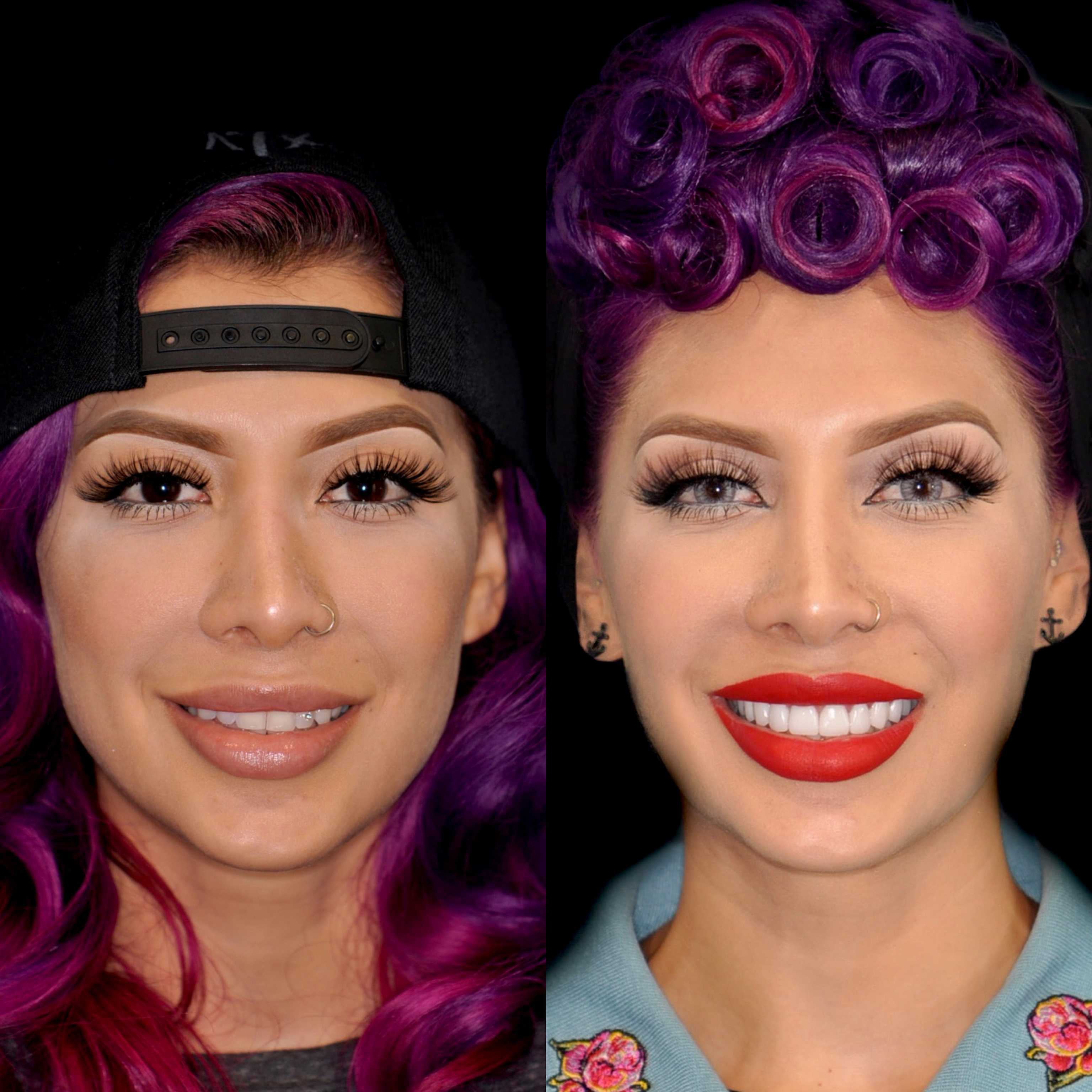
Treatment Approach: Dr. Chirag Patel planned an upper 10 veneer case to improve smile symmetry and overall facial harmony. Through detailed smile design and proportional analysis, custom porcelain veneers were crafted to create more consistent tooth dimensions, balanced incisal edges, and seamless integration with the patient’s natural features.
Outcome: The final result delivered a noticeably more symmetrical and refined glamorous smile while preserving a soft feminine aesthetic. The patient was thrilled with how balanced her smile appeared and shared that she felt significantly more confident in both photos and everyday interactions.
CASE 04
A Youthful Smile Refresh with Veneers and Restorative Care for a patient from Fresno, CA
A Youthful Smile Refresh with Veneers and Restorative Care for a patient from Fresno, CA
Patient: Female in her early 20s
Travel: Fresno, California
Chief Concern: The patient was unhappy with the yellow appearance of her teeth and wanted a brighter, more aesthetically pleasing smile.
Background: This patient, a woman in her early 20s from Fresno, California, was unhappy with the yellowish appearance of her teeth and felt her smile lacked brightness and overall harmony. She was also experiencing functional concerns in the posterior teeth that required restorative treatment.
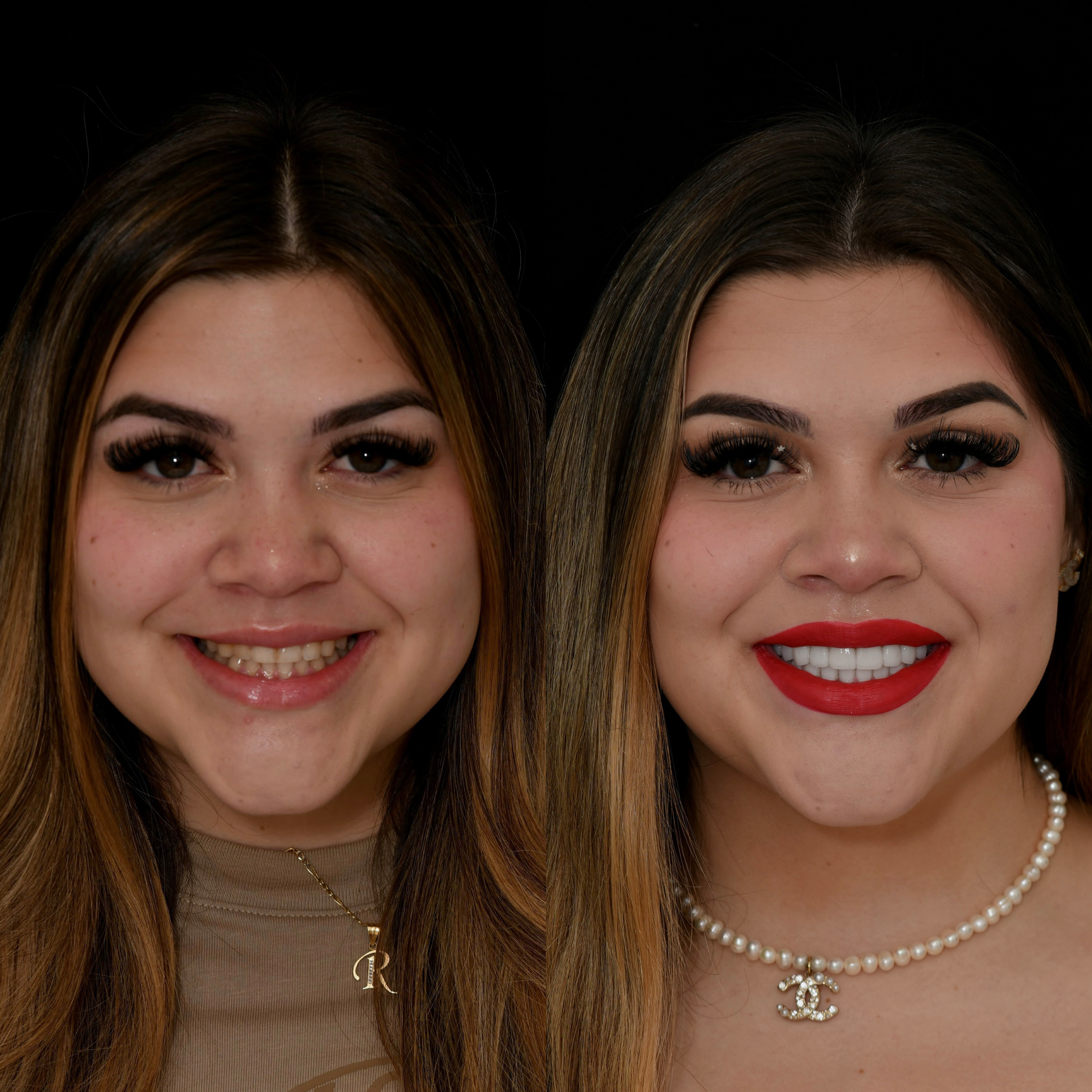
Treatment Approach: Dr. Chirag Patel developed a comprehensive treatment plan of upper 10 and bottom 10 veneers that combined cosmetic smile enhancement with restorative crown work for the back teeth. By improving the shade, proportions, and overall balance of the smile while restoring proper posterior function, the treatment achieved both aesthetic and functional improvements.
Outcome: The final result delivered a noticeably brighter, healthier-looking smile with improved overall harmony and function. The patient was thrilled with the refreshed appearance and shared that she felt significantly more confident smiling in social settings and photos.
CASE 05
Detail-Driven Veneers for Seamless Smile Enhancement in Beverly Hills, CA
Detail-Driven Veneers for Seamless Smile Enhancement in Beverly Hills, CA
Patient: Female in her early 30s
Travel: Torrance, CA
Chief Concern: The patient wanted to improve her smile aesthetically while avoiding the overly white or artificial appearance often associated with veneers.
Background: This patient, a woman in her early 30s from Torrance, presented seeking a cosmetic smile enhancement that looked natural and believable. She was unhappy with the shape and symmetry of her teeth and wanted to improve the overall harmony of her smile without creating an overly artificial appearance.
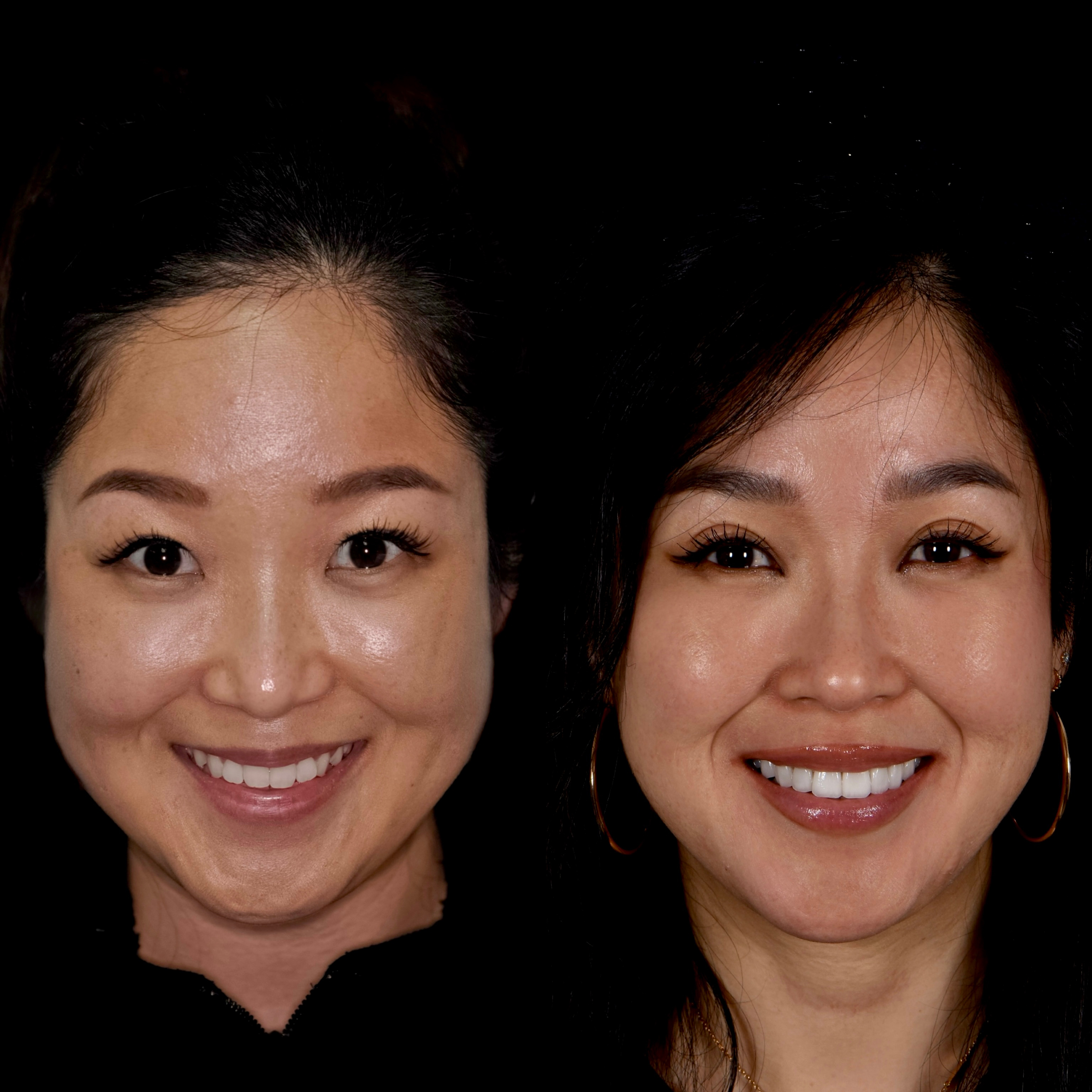
Treatment Approach: Dr. Chirag Patel planned an upper 8 veneer case in his Beverly Hills practice focused on detailed craftsmanship and smile balance. Custom porcelain veneers were designed to improve the shape and proportions of the teeth, creating better symmetry while incorporating natural translucency and texture for a youthful, realistic appearance.
Outcome: The final result delivered a refined and harmonious smile that appeared bright, balanced, and completely natural. By improving tooth shape and symmetry, the veneers enhanced the patient’s overall facial aesthetics while preserving a soft, believable look that never appeared fake or overdone.
CASE 06
Seamlessly Closing Gaps for a More Harmonious Smile Without Orthodontics using Veneers in Los Angeles, CA
Seamlessly Closing Gaps for a More Harmonious Smile Without Orthodontics using Veneers in Los Angeles, CA
Patient: Female in her early 30s
Travel: Torrance, CA
Chief Concern: The patient was unhappy with mild spacing between her teeth and wanted a more balanced smile without undergoing orthodontic treatment.
Background: This patient, a woman in her early 30s from Torrance, was concerned about spacing between her upper front teeth. She wanted to close the gaps and create a more aesthetic, symmetrical smile without undergoing braces or orthodontic treatment during her adult years.
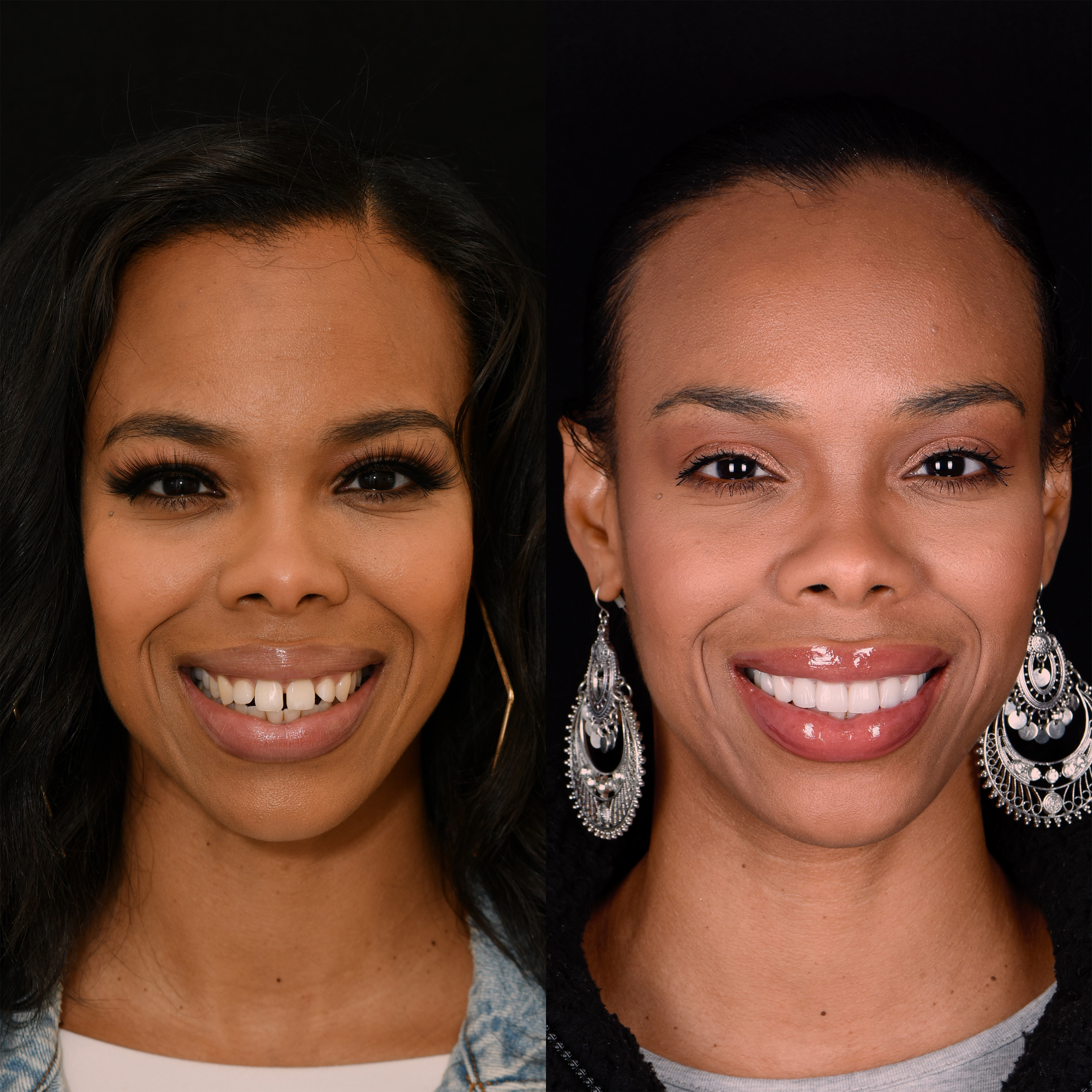
Treatment Approach: Dr. Chirag Patel planned an upper 8 veneer case to conservatively close the spaces while maintaining natural tooth proportions and facial harmony. Custom porcelain veneers were carefully designed so that the new size and shapes don’t look big while closing gaps. The goal of the treatment planning was to enhance symmetry, improve smile balance, and create a seamless, natural-looking result.
Outcome: The final result delivered a fuller, more harmonious smile with the spacing completely corrected without braces. The patient loved how natural and balanced her smile appeared and appreciated that the enhancement looked subtle rather than overly cosmetic.
WHY PATIENTS ACROSS LOS ANGELES CHOOSE DR. PATEL FOR PORCELAIN VENEERS
Trusted by high-discernment patients across Beverly Hills, Greater Los Angeles, Antelope Valley, Orange County, and Central Valley — and nationally and internationally.
Master Ceramist Partnerships
Every porcelain veneer is hand-layered by a Beverly Hills master ceramist Dr. Chirag Patel personally collaborates with — not outsourced to a high-volume centralized lab. The difference shows up in light-reflecting properties and lifespan.
Digital + Analog Workflow
Treatment begins with 3D imaging, digital intraoral scanning, and a physical wax-up so patients see and approve the proposed smile before any porcelain is fabricated. The mock-up is transferred onto the teeth in a non-invasive trial.
Strict Bonding Protocols
Final veneers are bonded under rubber dam or Isolite isolation, with shade matching verified under multiple light conditions. These protocols meaningfully affect long-term bond strength and aesthetic stability.
Conservative-First Philosophy
When direct composite bonding, no-prep veneers, or microabrasion will solve the problem, that is what Dr. Patel recommends. Patients are turned away from veneers when veneers are not the right answer.
14+ Years and 25,000+ Veneers
Dr. Chirag Patel has placed porcelain veneers for patients across Greater Los Angeles — including patients from the entertainment industry, sports personalities, and public figures (described generically, never identified).
Material Specifications Tailored Case-by-Case
Feldspathic porcelain, lithium disilicate (e.max), or layered ceramics are selected based on each patient's enamel, bite, underlying tooth color, and aesthetic goals. No default recipes.
Smile Artistry, Not Just Technique
Each case is balanced for opacity and translucency so the final veneers look alive, not flat or chalky. The goal is a better version of the patient's own smile — never a generic veneer look.
Follow-Up Care for the Life of the Smile
Every porcelain veneer case includes post-op check-ins, a custom night guard recommendation when indicated, and lifetime aesthetic refinements at Smiles by Dr. P.
SMILES BY DR. P | CHIRAG PATEL, DMD
SERVING PATIENTS ACROSS CALIFORNIA & NATIONALLY
Beverly Hills
Our home office at 435 N Roxbury Dr., Ste 410 — in the Golden Triangle medical corridor. Serving Beverly Hills, Bel Air, Holmby Hills, Century City, Brentwood, and the Westside.
Greater Los Angeles
Serving patients throughout LA County including West Hollywood, Westwood, Santa Monica, Pacific Palisades, Malibu, Hollywood Hills, Sherman Oaks, Studio City, and Encino.
Antelope Valley
Convenient appointments for patients from Lancaster, Palmdale, and the greater Antelope Valley area.
Orange County
Convenient access for patients from Irvine, Newport Beach, Anaheim, Huntington Beach, and throughout OC.
Central Valley
Extended appointments available for patients traveling from Fresno, Bakersfield, Visalia, and surrounding areas.
National & International
Consolidated multi-visit treatment plans available for traveling patients. Telehealth pre-consultations offered for out-of-area and international patients.
Ready to design your porcelain veneer smile?
Schedule a consultation with Dr. Chirag Patel — see your outcome digitally before any treatment begins.
Your New Smile Starts with One Conversation in Beverly Hills
Dr. Chirag Patel's consultations are thorough, unhurried, and commitment-free. You will leave knowing exactly what your options are — and what your smile could look like.

Powered by
