
© 2026 Smiles By Dr. P. All rights Reserved - Accessibility Statement - Privacy Policy - Sitemap
435 N. Roxbury Drive. Suite#410, BEVERLY HILLS, CA 90210 USA

Frequently Asked Questions about Porcelain Veneers
Medically Reviewed by: Dr. Chirag Patel and Dr. Aarti Bhardwaj | Last Updated: February 2026
Treatment Foundations & Philosophy
What is the difference between no-prep veneers and traditional veneers?
Traditional veneers require the removal of approximately 0.5–0.7 mm of enamel. No-prep veneers are ultra-thin porcelain restorations that may be bonded with little to no enamel reduction, depending on tooth position and anatomy.
Are no-prep porcelain veneers reversible?
Porcelain veneers are permanent and irreversible.
Even no-prep veneers involve bonding processes that chemically alter enamel, and removal can lead to sensitivity and structural weakening.
How much of my natural tooth is shaved down for veneers?
Traditional veneers require measurable enamel reduction, typically 0.5–0.7 mm.
Minimal-prep or no-prep veneers may require little to no shaving when tooth alignment allows adequate space for porcelain.
Can I see a 3D version of my smile before you touch my teeth?
Yes, a three-dimensional digital smile simulation can be created before treatment begins.
Digital Smile Design technology allows clinicians and patients to preview proportions, symmetry, and tooth shape prior to enamel modification.
How long does the entire veneer process take?
The porcelain veneer process usually requires three visits over one to four weeks.
This includes consultation and planning, tooth preparation with temporary veneers, and final porcelain bonding.

Aesthetics & Veneer Design
Do no-prep porcelain veneers stain over time
Porcelain veneers are highly resistant to staining because they are made from non-porous glass-ceramic.
Surface stains may accumulate from external sources but do not penetrate the porcelain and can be removed during professional cleanings.
Does the veneer procedure hurt
The procedure is performed under local anesthesia and is not painful.
Some patients experience temporary sensitivity to temperature changes for a few days after bonding of porcelain to tooth due to materials used.
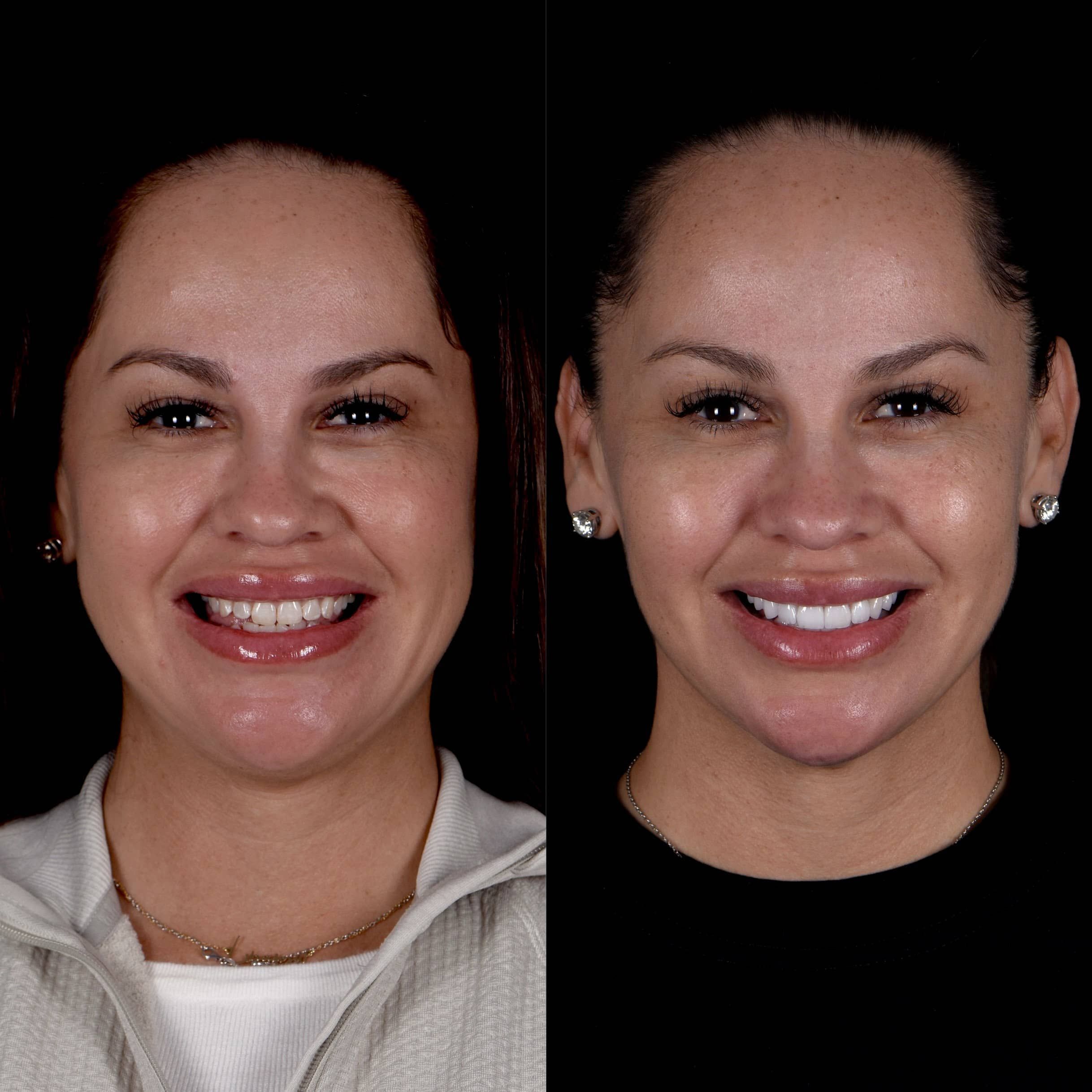
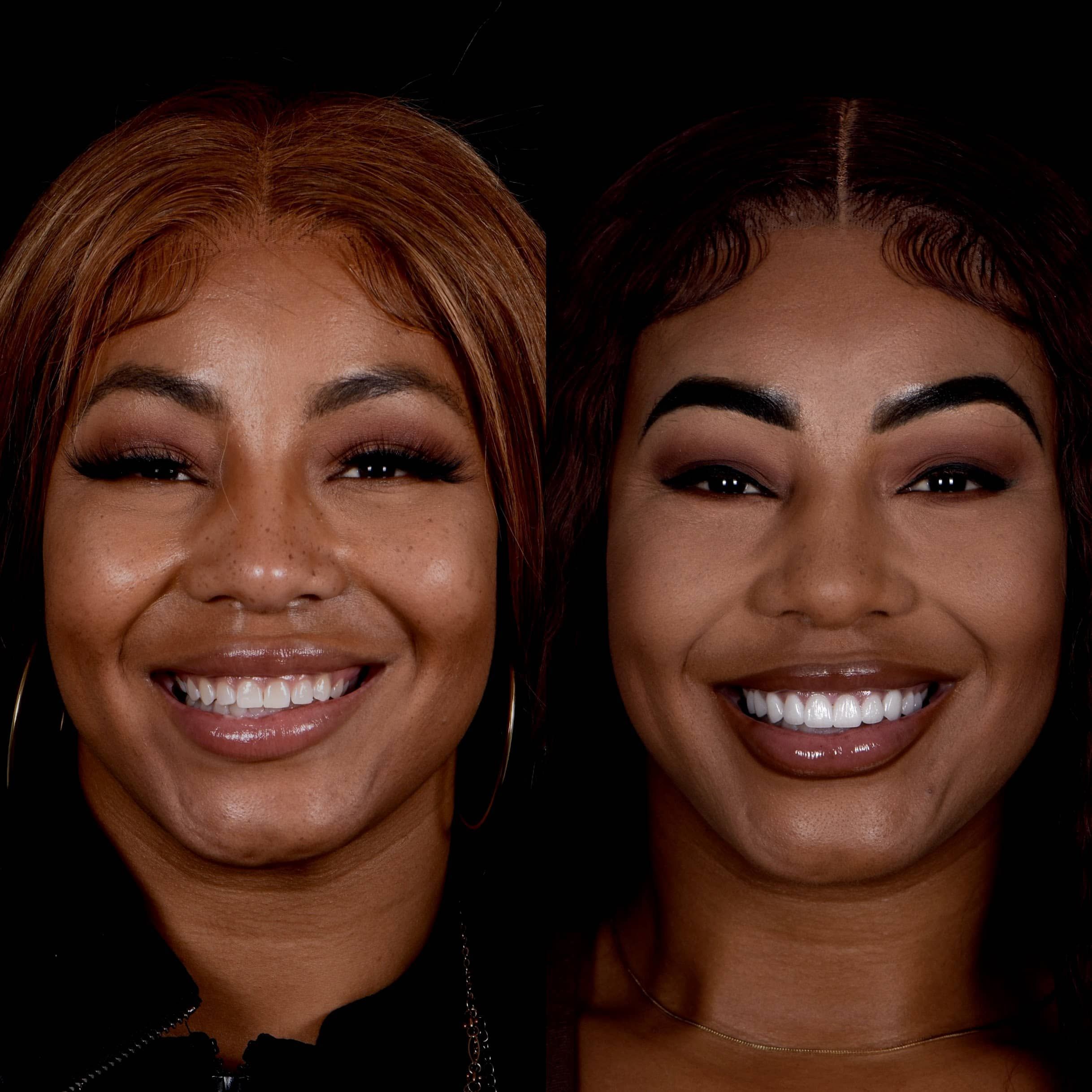
Will veneers look artificial or overly white?
Properly designed porcelain veneers mimic the translucency and light reflection of natural enamel.
Layered ceramics and anatomical contouring prevent an artificial or flat appearance.
Can I test my new smile before the veneers are permanent?
Yes, temporary veneers are worn before final porcelain fabrication.
This trial period allows evaluation of shape, length, speech, and comfort before permanent bonding.
Longevity, Health & Aftercare
How long do porcelain veneers last?
Porcelain veneers typically last 10–15 years.
With excellent oral hygiene, routine dental care, and nightguard use, veneers may last over 20 years.
What happens if I have cavities or gum disease first?
Veneers cannot be placed on teeth with active decay or periodontal disease.
All underlying dental conditions must be treated before veneer placement to ensure long-term success.
What are the cons of porcelain veneers?
Veneers are irreversible because enamel removal is permanent.
Temporary sensitivity may occur, and natural teeth without veneers can stain over time if maintenance is inadequate.
Can a chipped or broken veneer be repaired?
Minor surface defects may be smoothed or polished.
Fractured porcelain veneers usually require complete replacement to restore strength and appearance.
What is the most common reason veneers are replaced?
The most common reasons include structural damage, gum recession, or material aging. Grinding forces and natural tissue changes over time can affect veneer margins and durability.
Investment & Coverage
Are porcelain veneers covered by dental insurance?
Porcelain veneers are classified as cosmetic dental procedures and are typically not covered by insurance.
Coverage is rare and usually limited to cases involving documented structural necessity.
How much do porcelain veneers cost?
High-quality porcelain veneers generally cost between $1,500 and $2,500 per tooth.
Pricing varies based on materials, case complexity, and laboratory fabrication methods.
Schedule A Consult
Schedule your next visit with our highly experienced dentist.
Come see the difference! We can't wait to meet you!

Powered by
